
Agricultural spraying equipment is used to apply crop protection products and other agricultural liquids across fields and production environments. For professional farming operations, equipment selection is not simply a matter of choosing a machine with a tank and spray boom. The spraying system, nozzles, flow control, machine mobility, operating conditions, and level of application control all influence how the equipment fits a specific agricultural operation.
Modern agricultural spraying equipment increasingly combines mechanical systems with precision application technologies. Conventional sprayers can be complemented by variable-rate systems, PWM variable-rate nozzles, intelligent control systems, remote operation, and spraying robots where the application requires them.
This guide explains the main types of agricultural spraying equipment, how spraying systems work, important selection factors, and the role of precision technologies. It is intended for agricultural machinery buyers, importers, distributors, engineers, procurement teams, and farm operators evaluating equipment for modern crop protection operations.
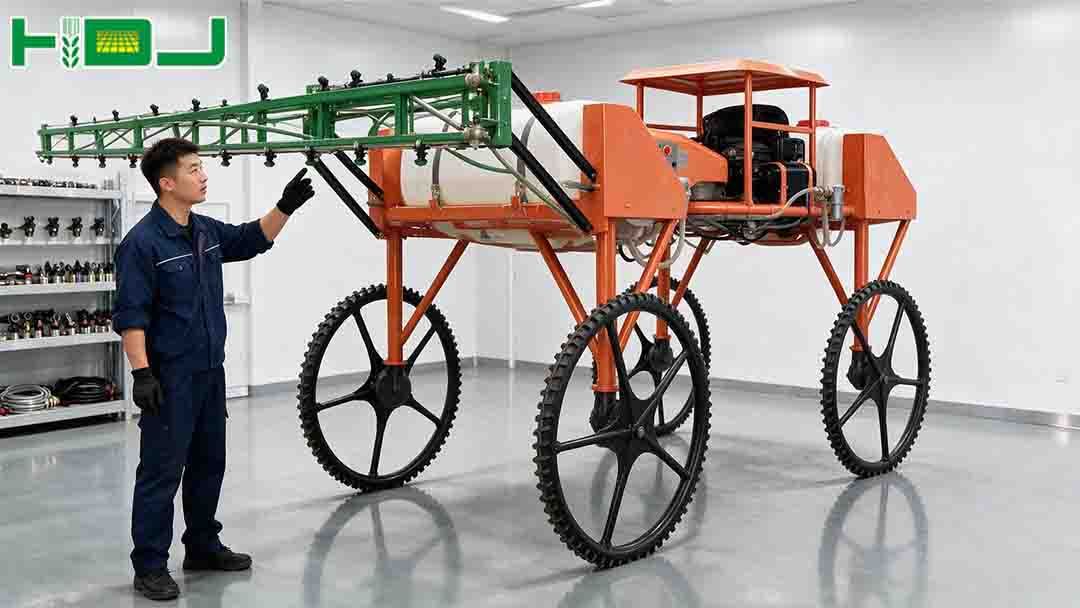
What Is Agricultural Spraying Equipment?
Agricultural spraying equipment refers to machinery and spraying systems designed to distribute agricultural liquids over crops or agricultural areas. The equipment can range from conventional agricultural sprayers to intelligent spraying systems, unmanned spraying machines, remote-control sprayers, and agricultural spraying robots.
A complete spraying operation normally involves several functional elements:
A machine or mobile platform for carrying and operating the spraying equipment
A liquid delivery system
A pump or other mechanism for moving spray liquid through the system
Flow and pressure control components
Spray lines and distribution components
Nozzles or other application devices
A control system where precision or intelligent functions are required
The exact configuration depends on the agricultural operation, field conditions, machine type, crop environment, and required level of application control.
For professional buyers, the key question is therefore not simply which sprayer to purchase, but which spraying system configuration is appropriate for the intended operation.
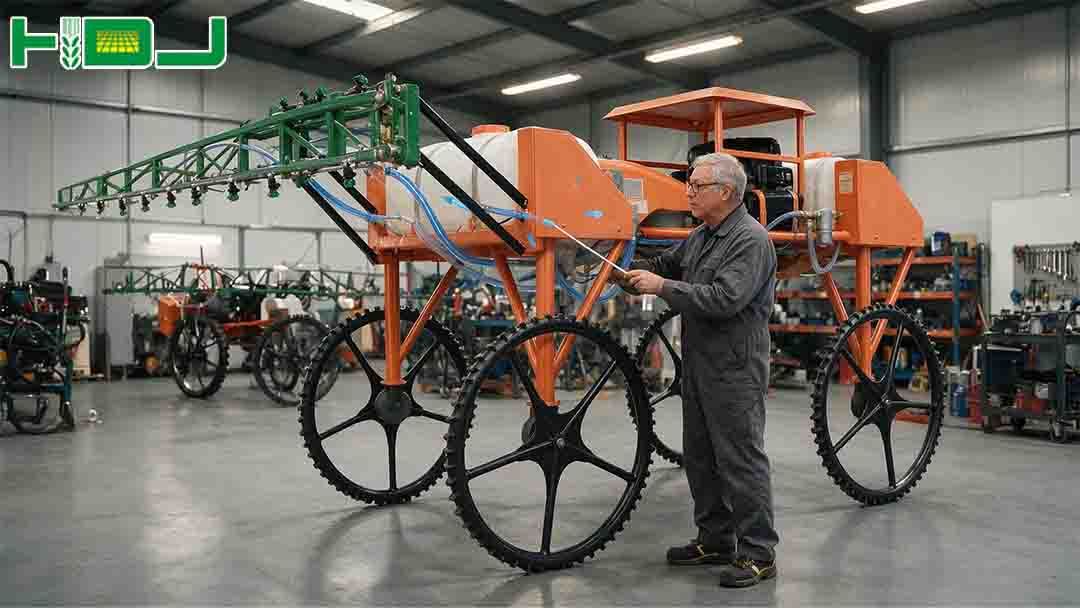
How Agricultural Spraying Systems Work
The basic principle of agricultural spraying is to transport a liquid from a supply system to application points and distribute it over the target area.
A simplified system can be understood as:
Liquid Supply → Flow and Pressure Control → Spray Lines → Nozzles → Crop or Target Area
The machine provides the mobility required to move through the agricultural environment. The spraying system manages liquid delivery, while the nozzles determine how the liquid is discharged.
In more advanced equipment, a control system can be added to manage spraying parameters according to the equipment design. Variable-rate spraying technologies can provide additional control over application output, while PWM systems can control nozzle operation through pulse-based flow management.
The practical performance of the overall system depends on how these components work together rather than on any single component.
Why Flow and Pressure Control Matter
Flow and pressure are fundamental considerations in a spraying system because they influence liquid delivery through the application system.
A professional equipment evaluation should therefore consider:
How the system controls liquid flow
How operating pressure is managed
Whether the control system supports the intended spraying method
How the nozzles are integrated with the flow system
Whether the machine can maintain the required operating conditions during field work
These factors should be evaluated according to the actual equipment configuration rather than treated as universal performance specifications.
Main Types of Agricultural Spraying Equipment
Agricultural spraying equipment can be categorized according to machine structure, operating method, spraying system, and level of automation.
Agricultural Sprayers
Agricultural sprayers provide a basic platform for applying agricultural liquids across crops or agricultural areas. Their configuration can vary according to the machine structure and spraying system.
For buyers, important considerations include the type of agricultural operation, field conditions, required spraying coverage, machine compatibility, and the control technology incorporated into the equipment.
Unmanned Boom Sprayers
Unmanned boom sprayers combine agricultural spraying equipment with unmanned operation. They can be considered where reducing direct operator involvement is an important part of the equipment requirement.
When evaluating this type of equipment, buyers should distinguish between the spraying function and the machine's operating-control architecture. The suitability of an unmanned platform depends on the intended agricultural environment and the specific equipment configuration.
Remote-Control Sprayers
Remote-control sprayers allow the machine to be operated remotely rather than requiring the operator to remain directly on the machine.
This type of equipment can be relevant where the operating environment, crop structure, field accessibility, or operational requirements make remote operation useful. The buyer should evaluate the complete machine, spraying system, control method, and intended application environment together.
Agricultural Spraying Robots
Agricultural spraying robots integrate spraying functions with robotic or automated agricultural equipment.
For professional buyers, robotic spraying should be evaluated as a complete agricultural machinery system rather than as a standalone spraying component. The equipment platform, spraying system, control architecture, operating environment, and application requirements all need to be considered.
Crawler Spraying Robots
Crawler spraying robots use a crawler-based platform for agricultural operations. Their relevance depends on the operating environment and the mobility requirements of the intended application.
When evaluating crawler spraying equipment, buyers should consider whether the machine platform is appropriate for the field conditions and whether the spraying system is properly matched to the agricultural operation.
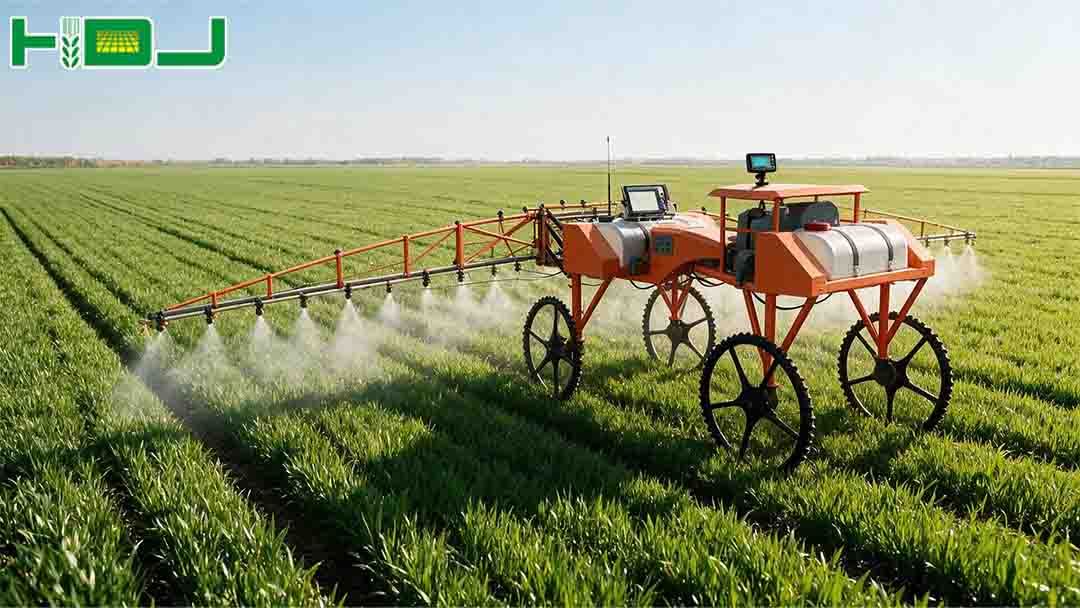
Precision Spraying Equipment and Variable-Rate Application
Precision agriculture changes the way agricultural spraying equipment can be configured and controlled.
Traditional spraying equipment generally aims to provide consistent application across the operating area. Precision spraying technologies introduce additional control over application parameters where the equipment and operation support it.
Variable-rate spraying is one example. Instead of treating the entire operating area as identical, a variable-rate system can be configured to adjust application output according to the requirements of the operation.
The value of such technology depends on the quality of the application system, the control architecture, the available operating information, and how the equipment is used in the field.
PWM Variable-Rate Nozzles
PWM, or pulse-width modulation, is a technology used in certain precision spraying systems to control nozzle output through rapid switching.
PWM variable-rate nozzles can therefore form part of a precision spraying architecture where variable application control is required.
For equipment buyers, the important consideration is compatibility between the nozzle technology and the rest of the spraying system. A nozzle should not be evaluated independently from the control system, liquid delivery system, machine platform, and intended application.
Variable-Rate Spraying Systems
A variable-rate spraying system may include application components, control systems, and other equipment designed to manage spraying output.
Before purchasing such a system, buyers should clarify:
What variable-rate function is required
Which components provide the control function
How the system integrates with the base sprayer
What information or operating inputs the system requires
Which crops and agricultural operations are intended
What level of application control is required
The exact architecture should be confirmed with the equipment manufacturer before procurement.
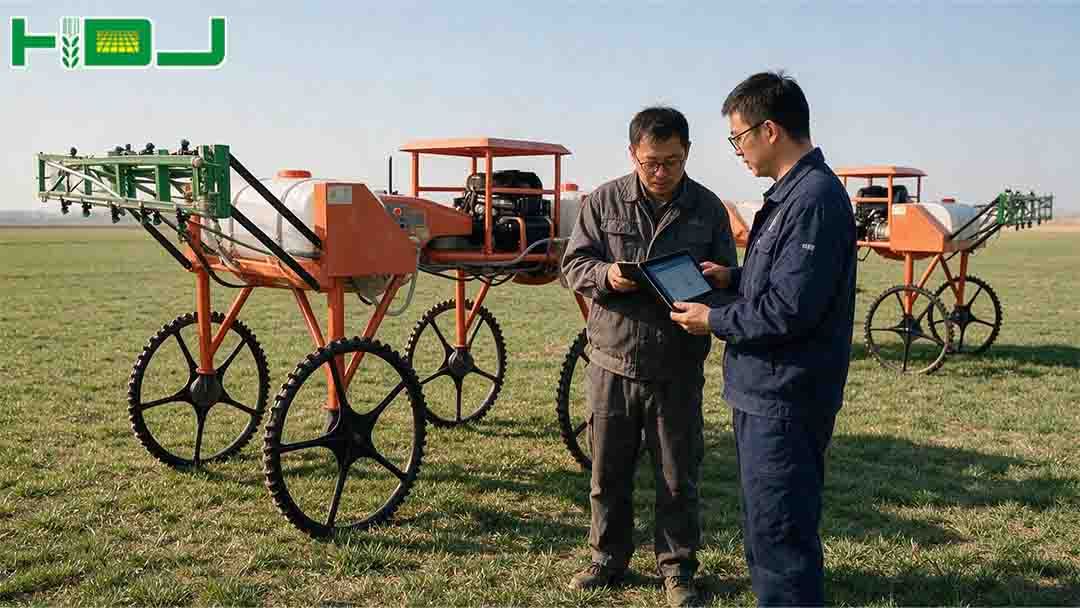
Key Factors When Choosing Agricultural Spraying Equipment
Agricultural spraying equipment should be selected according to the complete operating requirement rather than a single machine specification.
1. Crop and Agricultural Operation
The first consideration is the agricultural operation itself.
Field crop spraying, greenhouse agriculture, crop protection, and other agricultural applications can require different equipment configurations. Crop structure and the intended application method also influence the suitability of a spraying system.
A buyer should define the crop, agricultural operation, target area, and expected working conditions before comparing equipment.
2. Field Conditions and Terrain
Field conditions affect the choice of machine platform and spraying configuration.
Important considerations may include:
Field accessibility
Terrain
Ground conditions
Crop layout
Working space
Mobility requirements
Operating environment
The spraying system should be evaluated together with the machine platform because mobility directly affects how the equipment can be used in the field.
3. Spray Coverage and Application Consistency
Spray coverage is a central consideration when comparing agricultural spraying equipment.
The equipment configuration, nozzle arrangement, spray system, operating conditions, and machine movement all contribute to application consistency.
Instead of evaluating a sprayer only by its machine structure, professional buyers should examine the complete application system and how its components work together.
4. Flow and Pressure Control
Flow and pressure control should match the intended spraying system.
Buyers should determine:
How flow is controlled
How pressure is managed
Whether the system provides the required level of control
How the control system interacts with the nozzles
Whether variable-rate operation is required
This is particularly important when evaluating precision spraying equipment.
5. Nozzle Technology
Nozzles are directly involved in liquid application, making nozzle selection an important part of spraying system design.
Depending on the equipment configuration, buyers may need to consider conventional nozzles, variable-rate nozzles, or PWM-based technologies.
Nozzle selection should be considered together with the liquid delivery system and control architecture rather than as an isolated purchase.
6. Machine Mobility
A spraying system can only be useful if the machine can operate effectively in its intended environment.
For this reason, equipment selection should consider the relationship between:
Machine Platform → Mobility → Spraying System → Agricultural Operation
A field sprayer, remote-control machine, and spraying robot may use different platform concepts even when their fundamental purpose is crop protection.
7. Control Method
The control method is increasingly important in modern agricultural machinery.
Depending on the equipment, the system may use conventional operator control, remote control, unmanned operation, or intelligent control technologies.
The buyer should establish the required control method before selecting the machine because it can affect the overall equipment configuration.
8. Equipment Compatibility
For systems that combine a base machine with precision spraying components, compatibility should be confirmed before procurement.
Relevant questions include:
Is the spraying system compatible with the machine?
Can the required nozzles be integrated?
Is the control system compatible with the application equipment?
Are replacement components available?
Can the equipment be configured for the intended operation?
Compatibility is particularly important when purchasing components separately from the base agricultural machine.
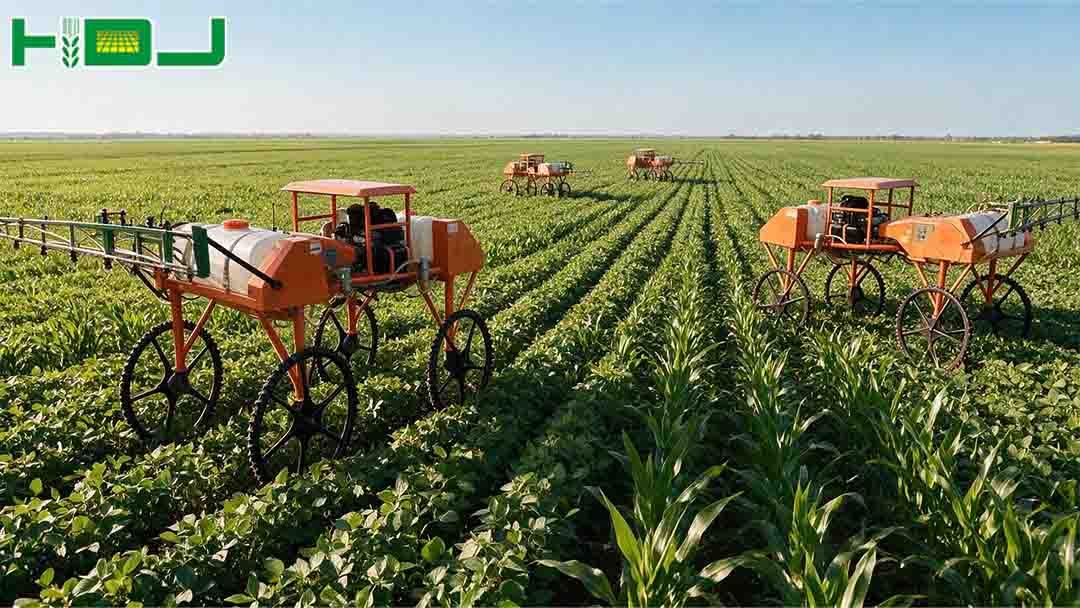
Conventional Spraying and Intelligent Spraying Systems
Conventional and intelligent spraying systems can serve different equipment requirements.
A conventional system may be appropriate where the agricultural operation primarily requires straightforward liquid application with established machine and spraying configurations.
An intelligent spraying system becomes more relevant when the project requires additional control, automation, remote operation, or precision application technologies.
The distinction should not be viewed as a universal choice between old and new equipment. Instead, the buyer should identify the actual operational requirement.
| Consideration | Conventional Spraying | Intelligent or Precision Spraying |
| Basic liquid application | Suitable | Suitable |
| Application control | Depends on system | May provide additional control functions |
| Variable-rate capability | Equipment dependent | Can be designed around variable-rate technologies |
| Remote operation | Equipment dependent | Relevant for applicable remote-control systems |
| Automated functions | Equipment dependent | Relevant where supported by the equipment |
| System complexity | Depends on configuration | Generally requires closer system integration |
| Buyer priority | Straightforward application requirements | Precision, control, or automation requirements |
The correct choice depends on the agricultural operation, equipment configuration, field environment, and project requirements.
Building an Agricultural Spraying Equipment System
For professional applications, agricultural spraying equipment should be viewed as a system.
A typical precision-oriented concept can be represented as:
Agricultural Platform → Spraying System → Nozzle and Flow Control → Precision Application
A robotic or remote-control configuration may instead be understood as:
Mobile Agricultural Platform → Remote or Intelligent Control → Spraying System → Application Components
These are conceptual relationships rather than universal equipment architectures. The actual configuration must be confirmed for each machine and application.
This system-based approach helps procurement teams identify which components are included in the complete machine and which may need to be specified separately.
Agricultural Spraying Equipment for Modern Farming Applications
Agricultural spraying equipment can support different agricultural operations depending on the machine and spraying system.
Field Crop Spraying
Field crop spraying commonly requires equipment capable of moving through agricultural fields while maintaining the intended spraying operation.
For this application, buyers should consider the relationship between field conditions, machine mobility, spraying coverage, nozzle arrangement, flow control, and operating method.
Precision Crop Protection
Precision crop protection places greater emphasis on application control.
Relevant technologies may include precision spraying systems, variable-rate spraying systems, PWM variable-rate nozzles, and intelligent control components where supported by the equipment configuration.
The objective is to match the application system to the operational requirement rather than adding technology without a clear use case.
Greenhouse Agriculture
Greenhouse environments have different spatial and operating constraints from open fields.
Equipment selection should therefore consider the crop environment, available operating space, machine dimensions, spraying method, and control requirements.
Remote-control spraying equipment may be relevant to specific greenhouse operations where the equipment configuration and operating conditions support its use.
Intelligent Farming Operations
Intelligent agricultural equipment combines machinery with control and application technologies.
In spraying operations, this may involve intelligent spraying systems, variable-rate technologies, remote-control equipment, or agricultural spraying robots.
The appropriate technology depends on the actual operation and the level of automation required.
Agricultural Spraying Equipment Maintenance Considerations
Maintenance requirements depend on the machine and spraying system, but professional buyers should establish a maintenance plan before equipment deployment.
Particular attention should be given to components directly involved in liquid application and control.
A practical maintenance program should consider:
Inspection of spraying components
Inspection of spray lines and connections
Nozzle condition
Flow and pressure control components
Control-system condition
Machine mobility components
Cleaning procedures appropriate to the equipment
Replacement parts and service requirements
Manufacturers should provide equipment-specific maintenance instructions where applicable. Buyers should avoid assuming that all spraying systems use the same maintenance procedures.
Common Agricultural Spraying Equipment Selection Mistakes
Choosing the Machine Before Defining the Operation
A machine may look suitable based on general specifications but still be inappropriate for the actual agricultural operation.
The crop, field environment, application method, and required control level should be defined first.
Focusing Only on the Sprayer
The sprayer is only one part of the complete system.
Nozzles, flow control, pressure management, control systems, and the machine platform can all affect how the equipment performs its intended function.
Selecting Precision Technology Without a Defined Requirement
Variable-rate systems and PWM technologies can be valuable in appropriate applications, but buyers should first identify why additional application control is required.
Technology should support the agricultural operation rather than increase system complexity without a clear purpose.
Ignoring Compatibility
Combining components from different systems without confirming compatibility can create procurement and operational problems.
The manufacturer or technical supplier should confirm the intended system configuration before components are ordered separately.
Evaluating Equipment Without Considering Service
Agricultural equipment is used in practical field environments, so procurement should consider not only the machine itself but also technical documentation, replacement components, maintenance requirements, customization, and supplier support.
Agricultural Spraying Equipment Buying Guide for B2B Buyers
For importers, distributors, engineering companies, and professional agricultural buyers, a structured procurement process can reduce uncertainty.
Step 1: Define the Agricultural Operation
Specify:
Crop
Agricultural operation
Operating environment
Field conditions
Required application method
Step 2: Define the Machine Requirement
Determine whether the project requires a conventional sprayer, boom sprayer, remote-control sprayer, spraying robot, crawler platform, or another equipment configuration.
Step 3: Define the Application System
Clarify the required spraying system, nozzle technology, flow control, pressure control, and application method.
Step 4: Define the Control Requirement
Determine whether conventional operation, remote control, variable-rate application, or intelligent control is required.
Step 5: Confirm System Compatibility
Ask the supplier to confirm that the machine platform, spraying system, control system, and application components are compatible.
Step 6: Review Technical Documentation
Before placing an order, request the available product documentation and technical information relevant to the selected configuration.
Step 7: Discuss Customization
Agricultural operations vary considerably. If the standard equipment does not match the intended application, discuss application-specific equipment or component development with the manufacturer.
Questions to Ask an Agricultural Spraying Equipment Supplier
Professional buyers can use the following questions during supplier evaluation:
Which agricultural operations is the equipment designed for?
What spraying system is included in the machine?
Which control method is used?
What nozzle technologies are supported?
Is variable-rate application available for the proposed configuration?
How does the spraying system integrate with the machine platform?
Which operating environments is the equipment intended for?
What technical documentation is available?
Which replacement components are available?
What maintenance requirements should be considered?
Can the equipment be customized for a specific agricultural application?
What technical support is available for installation and operation?
Which components are developed or manufactured by the supplier?
These questions help buyers evaluate the complete equipment solution rather than comparing machines only by headline specifications.
Agricultural Spraying Equipment from Duojia
HeFei Duojia Agricultural Technology Co., Ltd. develops intelligent agricultural equipment and precision fertilizer and pesticide application technologies.
Its product and technology areas include agricultural sprayers, unmanned boom sprayers, remote-control sprayers, agricultural spraying robots, crawler spraying robots, precision spraying systems, variable-rate spraying systems, PWM variable-rate nozzles, and related agricultural machinery technologies.
Duojia states that it focuses on precision fertilizer and pesticide application and has developed both complete agricultural equipment and core components. Its R&D activities cover areas including precision spraying, intelligent agricultural machinery, variable-rate application, control systems, and related mechanical components.
The company also reports more than 230 national patent applications and cooperation with universities and research institutions in agricultural machinery and precision application technology.
For B2B buyers, this combination of complete equipment and component development can be relevant when a project requires a standard agricultural spraying machine, a precision application system, or application-specific equipment development.
FAQ
What is agricultural spraying equipment?
Agricultural spraying equipment is machinery and associated spraying systems used to distribute agricultural liquids across crops or agricultural areas. The configuration can range from conventional agricultural sprayers to intelligent, remote-control, variable-rate, and robotic spraying equipment.
What are the main types of agricultural spraying equipment?
Common categories include agricultural sprayers, unmanned boom sprayers, remote-control sprayers, agricultural spraying robots, crawler spraying robots, and precision spraying systems. The appropriate type depends on the agricultural operation and operating environment.
How do precision spraying systems differ from conventional spraying equipment?
Precision spraying systems can incorporate additional application and control technologies, such as variable-rate systems and PWM variable-rate nozzles. The actual capabilities depend on the equipment configuration and control architecture.
How should I choose agricultural spraying equipment for a farm?
Start by defining the crop, agricultural operation, field conditions, application requirements, machine mobility, control method, and required level of application precision. Then evaluate compatible equipment configurations and supplier support.
Are PWM variable-rate nozzles part of agricultural spraying equipment?
PWM variable-rate nozzles can be used as components within certain precision spraying systems. Their suitability depends on compatibility with the spraying system, control system, and intended application.
What should B2B buyers ask an agricultural spraying equipment manufacturer?
Buyers should ask about the intended agricultural applications, machine configuration, spraying system, control method, nozzle compatibility, technical documentation, maintenance, replacement components, customization, and technical support.
Can agricultural spraying equipment be customized?
Customization may be possible depending on the manufacturer and project requirements. Buyers should provide details about the agricultural operation, machine platform, spraying system, control requirements, and operating environment for technical evaluation.
What is the difference between an agricultural sprayer and a spraying robot?
An agricultural sprayer primarily describes equipment designed for spraying operations, while a spraying robot integrates spraying with a robotic or automated agricultural machine platform. The actual functions depend on the specific equipment configuration.
Conclusion
Agricultural spraying equipment has developed from basic liquid application machinery into a broader group of systems that can incorporate precision spraying, variable-rate control, PWM nozzle technology, remote operation, and agricultural robotics. The right equipment depends on the agricultural operation rather than on a single technology or machine type.
Professional buyers should evaluate the crop, field conditions, spraying requirements, machine mobility, flow and pressure control, nozzle technology, control method, system compatibility, maintenance, and supplier support as part of one equipment decision.
For projects requiring standard machinery, precision application systems, or customized agricultural equipment, working directly with a manufacturer can help clarify the relationship between the machine platform, spraying system, and control technologies.
B2B Inquiry: If you are evaluating agricultural spraying equipment for a specific crop, field operation, greenhouse environment, or precision agriculture project, contact Duojia to discuss the required equipment configuration, application conditions, and technical requirements.