
Choosing an agricultural sprayer is an equipment decision that directly affects how crop protection operations are carried out in the field. The right machine needs to match the crop, field conditions, terrain, working method, and required level of application control.
For farmers, contractors, agricultural machinery distributors, and professional procurement teams, comparing sprayers only by machine size or price can lead to an unsuitable configuration. A self-propelled boom sprayer may be appropriate for one field operation, while a remote-control or crawler spraying robot may be more suitable where terrain, accessibility, or operating conditions require a different mobility approach.
This guide explains the main factors to evaluate when selecting an agricultural sprayer, including crop and field requirements, spraying systems, control technology, machine mobility, maintenance, and supplier support.
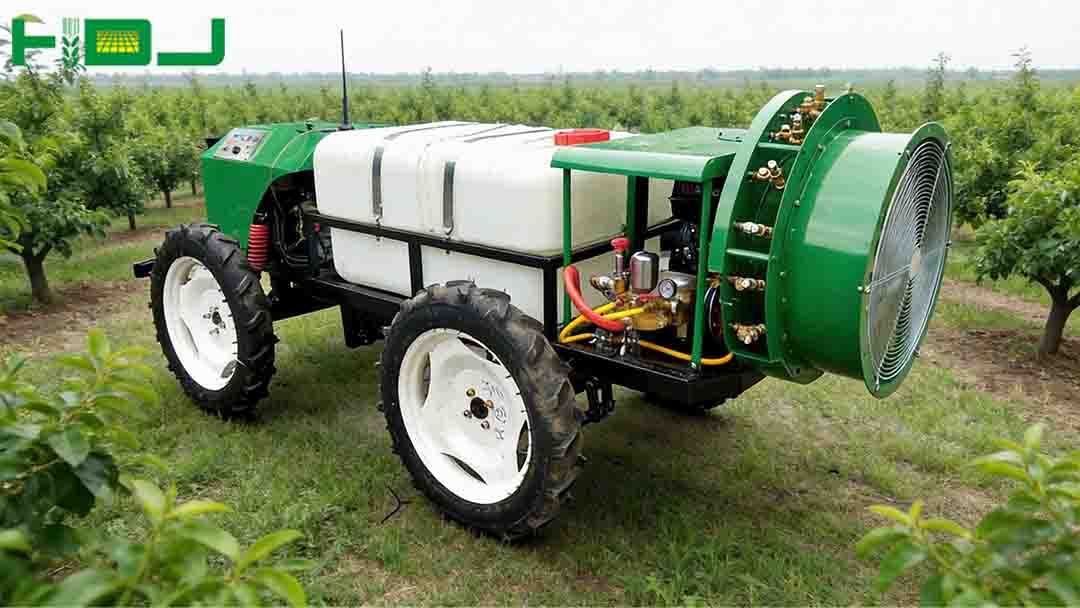
Start With the Agricultural Operation
The first step is to define what the sprayer needs to accomplish. Agricultural spraying requirements vary considerably between farms and crops, so equipment selection should begin with the actual operation rather than a specific machine model.
Consider:
What crops will be treated?
What type of crop protection operation will be performed?
What is the typical field layout?
Is the terrain level or uneven?
Are there obstacles or areas with limited accessibility?
How frequently will the machine be used?
Does the operation require conventional spraying or more advanced application control?
A machine designed for broad field operations may not be the most practical choice for every environment. Similarly, advanced control functions are most useful when they address an actual operational requirement.
For B2B buyers, defining these requirements before contacting suppliers makes technical comparison and quotation evaluation much easier.
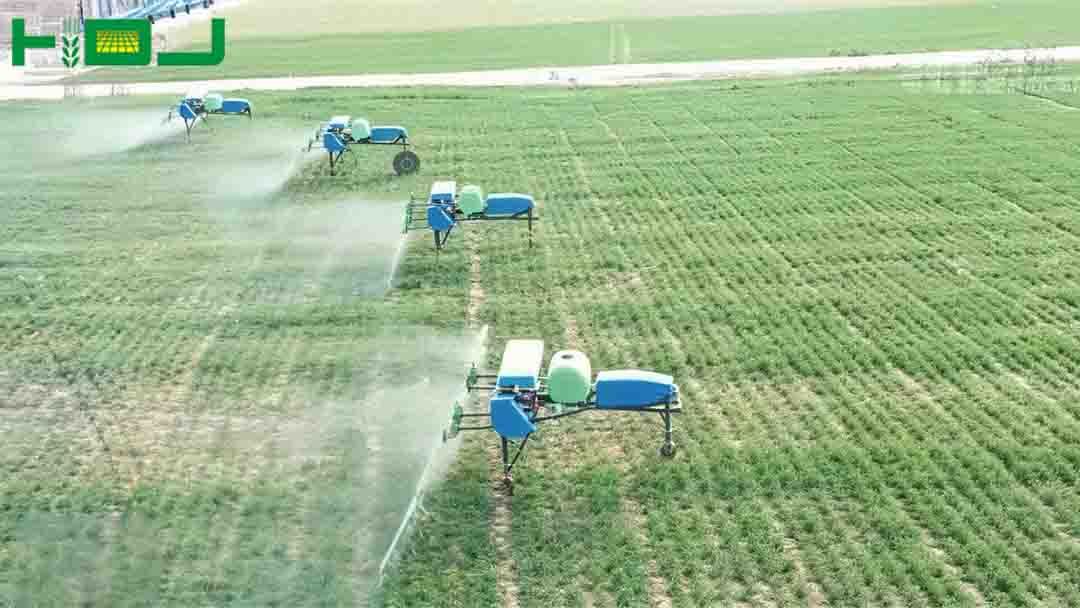
Match the Sprayer to Field Conditions
Field conditions are one of the most important factors in agricultural sprayer selection.
Field Size and Layout
Large, relatively open fields may favor equipment designed for efficient boom spraying and straightforward field movement. Where fields are smaller, irregularly shaped, or divided into different working areas, maneuverability becomes more important.
Terrain and Ground Conditions
Terrain can influence the appropriate machine platform. Buyers should consider whether the equipment will operate on flat farmland, uneven ground, soft soil, or areas where conventional wheeled equipment may have limitations.
Crawler-based agricultural spraying robots can be considered when the operating environment requires a different mobility solution. The key point is to evaluate the actual terrain and access requirements rather than selecting a machine solely by its product category.
Accessibility
Some agricultural operations involve areas that are difficult for larger conventional machines to reach. Remote-control or unmanned equipment can be relevant when the operating method needs to reduce the need for an operator to remain directly on the machine.
The suitability of these systems still depends on the specific equipment configuration, field environment, control system, and operating requirements.
Choose the Appropriate Agricultural Sprayer Type
There is no single agricultural sprayer configuration that suits every farm. The main equipment categories should be evaluated according to their operating method and application requirements.
| Sprayer Type | Typical Selection Consideration |
| Boom sprayer | Suitable when consistent boom-based field spraying is required |
| Self-propelled boom sprayer | Consider when an integrated machine platform is required for field operations |
| Remote-control sprayer | Consider when remote operation is useful for the working environment |
| Unmanned agricultural sprayer | Consider when the application requires an unmanned operating approach |
| Agricultural spraying robot | Consider when robotic or intelligent equipment is appropriate for the operation |
| Crawler spraying robot | Consider when machine mobility and field accessibility are important selection factors |
These categories should not be treated as interchangeable. The correct choice depends on crop conditions, field characteristics, operating requirements, available infrastructure, and the control functions provided by the equipment.
Evaluate the Spraying System
The machine platform is only one part of an agricultural sprayer. The spraying system determines how the application is delivered to the crop.
A typical precision spraying solution may involve:
Agricultural Platform → Spraying System → Nozzles and Flow Control → Application Management
The relationship between these components matters when comparing equipment.
Spray Coverage
The spraying system should be evaluated according to the required crop coverage and application pattern. Buyers should consider whether the equipment can provide an appropriate and consistent spray pattern for the intended operation.
Flow and Pressure Control
Flow and pressure management are important when consistent application is required. When comparing machines, buyers should understand how the spraying system controls these parameters and whether the control method matches the intended agricultural operation.
Nozzle Technology
Nozzles are a critical part of the application system because they influence how liquid is delivered. Buyers should evaluate nozzle configuration, compatibility, replacement requirements, and how the nozzle system integrates with the sprayer's control system.
For precision application projects, it is useful to evaluate the spraying system as a complete system rather than treating nozzles as isolated components.
Consider Precision and Variable-Rate Application
Some farms require more than conventional uniform spraying. Precision agriculture technologies can provide additional control over how agricultural inputs are applied.
Variable-rate spraying systems can be relevant where application requirements vary within the field or according to an established application strategy.
When evaluating a precision spraying system, buyers should ask:
How is application flow controlled?
What type of control system is used?
Can the system support the intended application strategy?
Are the spraying components compatible with the control system?
Is variable-rate application actually required for the farm's operation?
What technical support is available for system integration?
Variable-rate technology should be selected because it addresses a defined operational requirement, not simply because it is a more advanced feature.
Decide Whether Remote or Unmanned Operation Is Appropriate
Remote-control and unmanned agricultural spraying equipment can provide an alternative operating approach for specific agricultural environments.
The decision should be based on practical requirements such as:
Operator position
Field accessibility
Terrain
Machine visibility
Required control functions
Operating workflow
Maintenance and technical support
Remote operation and unmanned operation should also be evaluated carefully from a system perspective. The machine platform, spraying equipment, control system, and operator interface need to work together for the intended application.
For buyers considering a remote-control agricultural sprayer, it is important to ask suppliers what functions are actually included in the supplied configuration rather than assuming that every machine offers the same level of automation.
Evaluate Machine Mobility
Mobility is particularly important when comparing different agricultural spraying machines.
A buyer should evaluate:
Field access → Ground conditions → Maneuverability → Machine platform → Operating method
For conventional field operations, a self-propelled boom sprayer may provide the required equipment configuration. In more demanding environments, a crawler spraying robot or another specialized platform may warrant consideration.
The important question is not simply "Which machine is more advanced?" but rather "Which machine platform fits the field conditions and operating workflow?"
Think About Equipment Integration
Agricultural sprayers increasingly involve multiple technologies rather than a standalone tank, pump, and boom.
A modern agricultural plant protection system may integrate:
Machine platform
Spraying equipment
Spray nozzles
Flow control
Pressure control
Precision application technology
Remote or intelligent control
Supporting agricultural machinery systems
For professional buyers, system compatibility should therefore be included in the procurement process.
If the equipment is expected to integrate with other agricultural machinery or precision application components, confirm compatibility before purchasing.
Compare Maintenance and Service Requirements
An agricultural sprayer operates in a demanding environment. Maintenance should therefore be considered before the purchase rather than after the machine enters service.
Important areas include:
Spraying Components
Nozzles, liquid-handling components, and other spraying-system parts require appropriate inspection and maintenance.
Control Systems
Electronic and intelligent control components should be evaluated for accessibility, troubleshooting procedures, and supplier support.
Machine Platform
The mobility system and mechanical components should be appropriate for the operating environment and maintenance capabilities available to the buyer.
Spare Parts
International buyers should confirm the supplier's spare-parts support, replacement-part availability, and technical documentation before placing an order.
For importers and distributors, after-sales support can be particularly important because the end customer may depend on the distributor for troubleshooting and replacement components.
Questions to Ask an Agricultural Sprayer Supplier
A professional procurement process should go beyond asking for the product price.
Before requesting a quotation, buyers can prepare a technical requirement covering:
Target crop
Agricultural operation
Field conditions
Terrain
Required operating method
Spraying system requirements
Control requirements
Precision application requirements
Equipment integration requirements
Maintenance expectations
Spare-parts requirements
Delivery requirements
Documentation requirements
Customization requirements
Then ask the supplier:
Which equipment configuration matches the stated operating conditions?
What spraying system is included?
How are flow and pressure controlled?
What nozzle configuration is supplied?
Is remote or unmanned operation available for the proposed configuration?
Which precision application functions are supported?
What maintenance documentation is provided?
What spare parts are normally required?
Can the equipment or components be customized?
What technical support is available after delivery?
This approach makes supplier quotations easier to compare because each supplier is responding to the same technical requirements.
Agricultural Sprayer Selection Checklist
Before making a final purchasing decision, evaluate the equipment across five areas.
1. Application
Does the machine match the intended crop protection operation?
2. Field
Can the machine operate appropriately under the expected terrain, access, and field conditions?
3. Spraying System
Does the nozzle, flow, pressure, and application-control configuration meet the operational requirement?
4. Control
Does the equipment provide the required conventional, remote, intelligent, or variable-rate control functions?
5. Supplier Support
Can the supplier provide technical documentation, spare parts, customization support, and after-sales assistance appropriate for the project?
A machine that performs well in one category may still be unsuitable if it fails to meet the requirements of another.
When to Consider Intelligent Agricultural Spraying Equipment
Intelligent agricultural equipment becomes particularly relevant when a farm has defined requirements for improved control, automation, or precision application.
Relevant equipment areas may include:
Unmanned boom sprayers
Remote-control sprayers
Agricultural spraying robots
Crawler spraying robots
Precision spraying systems
Variable-rate spraying systems
PWM variable-rate nozzles
The appropriate technology depends on the actual operation. Buyers should first define the agricultural problem and then determine whether intelligent or precision technology provides a practical solution.
For manufacturers, distributors, and engineering companies, this approach also helps avoid purchasing equipment with functions that are not required by the end user.
Related Agricultural Spraying Equipment
For buyers evaluating different agricultural spraying approaches, relevant equipment categories include unmanned boom sprayers, remote-control sprayers, agricultural spraying robots, crawler spraying robots, precision spraying systems, variable-rate spraying systems, and PWM variable-rate nozzles.
The most suitable configuration should be determined from the crop, field conditions, application requirements, control method, and equipment integration needs rather than from the product category alone.
Frequently Asked Questions
What is the most important factor when choosing an agricultural sprayer?
The most important starting point is the intended agricultural operation and its field conditions. Crop type, terrain, accessibility, spraying requirements, control needs, and maintenance capabilities should then be evaluated together.
How do I choose between a self-propelled boom sprayer and a spraying robot?
Compare the actual operating environment, required mobility, operating method, control requirements, and spraying-system configuration. A spraying robot may be relevant where robotic or remote operation is required, while a self-propelled boom sprayer may be appropriate for conventional integrated field spraying operations.
When should I consider an unmanned agricultural sprayer?
An unmanned agricultural sprayer can be considered when the farm has a defined requirement for unmanned operation. Buyers should evaluate the machine platform, control system, spraying system, field conditions, and operating workflow together.
Are crawler spraying robots suitable for every farm?
No. Crawler spraying robots should be evaluated according to the actual terrain, ground conditions, accessibility, crop environment, and equipment requirements. A crawler platform is not automatically the right choice for every agricultural operation.
What should I compare when buying agricultural spraying equipment?
Compare the machine platform, spraying system, nozzle configuration, flow and pressure control, operating method, control technology, maintenance requirements, spare-parts support, documentation, and supplier technical support.
Is variable-rate spraying necessary for every farm?
No. Variable-rate spraying should be considered when the farm has an application requirement that benefits from variable application control. Buyers should first establish the operational need before selecting the technology.
What should international buyers ask an agricultural sprayer manufacturer?
International buyers should provide information about the crop, operation, field conditions, terrain, spraying requirements, control requirements, delivery destination, documentation, spare parts, customization, and technical support. This allows the manufacturer to recommend a more appropriate configuration.
Conclusion
Choosing the right agricultural sprayer requires a system-level evaluation rather than a simple comparison of machine size or purchase price. The most appropriate equipment depends on the crop, agricultural operation, field conditions, terrain, accessibility, spraying requirements, control method, and maintenance capabilities.
For conventional field operations, boom-based and self-propelled equipment may be appropriate. Where remote operation, robotic mobility, or precision application is required, buyers can evaluate remote-control sprayers, unmanned agricultural sprayers, crawler spraying robots, precision spraying systems, and variable-rate technologies.
For professional B2B procurement, the best starting point is a clear technical requirement. Define the application first, evaluate the equipment configuration second, and then compare suppliers based on technical compatibility, documentation, customization capabilities, spare-parts support, and after-sales service.
If you are evaluating agricultural spraying equipment for a specific crop, field environment, or export project, contact Duojia to discuss your application requirements and identify a suitable equipment or precision spraying configuration.