
Self-propelled sprayers are agricultural machines that combine a mobile machine platform with a spray tank, liquid delivery system and spraying equipment. Unlike tractor-mounted sprayers, the machine provides its own propulsion, so mobility and spraying functions are integrated into one agricultural equipment configuration.
For professional buyers, the important question is not simply whether a sprayer is self-propelled. The machine must also match the crop, field layout, required spray coverage, operating conditions and spraying system.
This guide explains how self-propelled sprayers work, their practical benefits, common agricultural applications and the technical factors buyers should evaluate before selecting a machine.
What Is a Self-Propelled Sprayer?
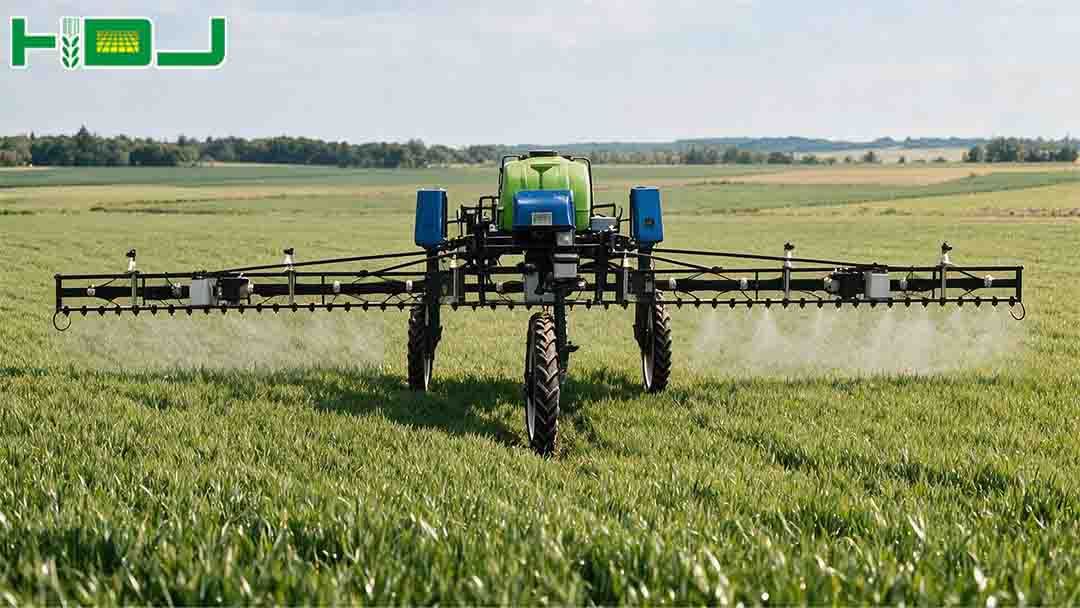
A self-propelled sprayer is an agricultural spraying machine with its own drive system. The machine carries the components required for spraying and moves through the field without depending on a separate tractor as its basic mobile platform.
A typical configuration may include:
A self-propelled chassis
Drive and steering systems
Spray tank
Pump or liquid delivery system
Spray boom or spray rod
Spray nozzles
Pressure and flow-control components
Operator or machine-control system
The exact configuration varies between machines.
This distinction is important when comparing agricultural spraying equipment. A tractor-mounted sprayer separates the tractor from the spraying implement, while a self-propelled sprayer integrates the two functions into one machine.
The result is a different equipment architecture, with mobility, machine dimensions and spraying configuration designed as part of the same system.
How Do Self-Propelled Sprayers Work?
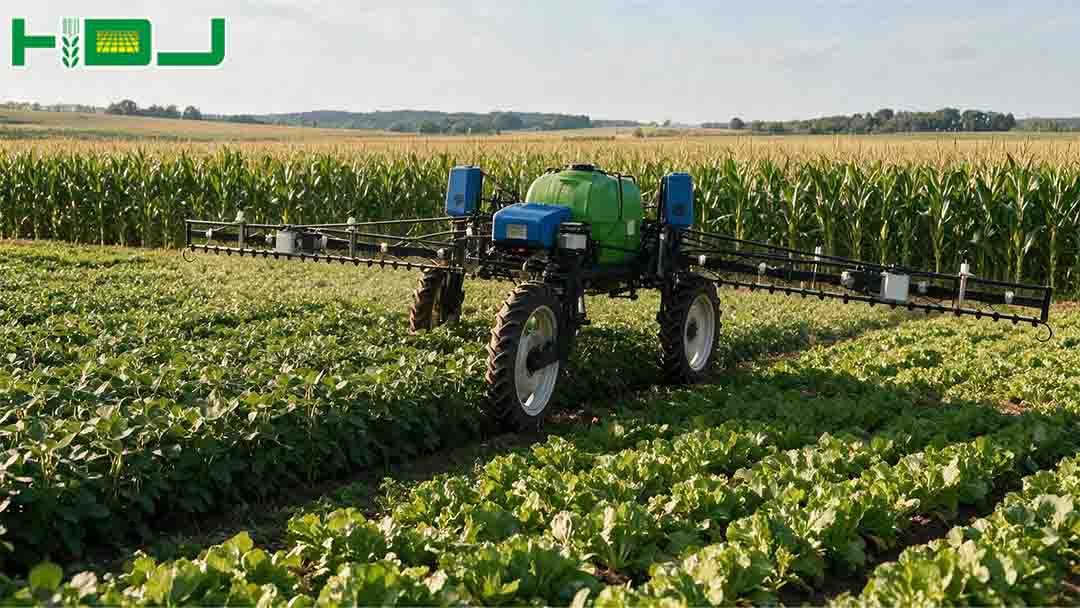
The basic operating process is straightforward:
Liquid supply → pressure and flow management → spray boom or spray rod → nozzles → crop application
At the same time, the machine's drive and steering systems move the sprayer through the designated operating area.
1. Liquid Storage
The spray tank stores the liquid to be applied during the agricultural operation. Tank capacity is an important selection factor because it needs to fit the intended workflow and machine configuration.
A larger tank is not automatically better. Buyers should consider machine size, field access, refill arrangements and the required spraying operation together.
2. Liquid Delivery
The liquid moves from the tank through the spraying system toward the boom or spray rod.
Depending on the machine, the system may include pumps, pipes, filters, pressure-control components and other delivery equipment.
The exact pump and flow-control configuration should be confirmed from the technical documentation for the selected model.
3. Spray Boom or Spray Rod
The boom or spray rod positions the spray nozzles across the intended application area.
Its length and configuration affect the potential spraying span and must be considered together with crop arrangement, field dimensions and machine mobility.
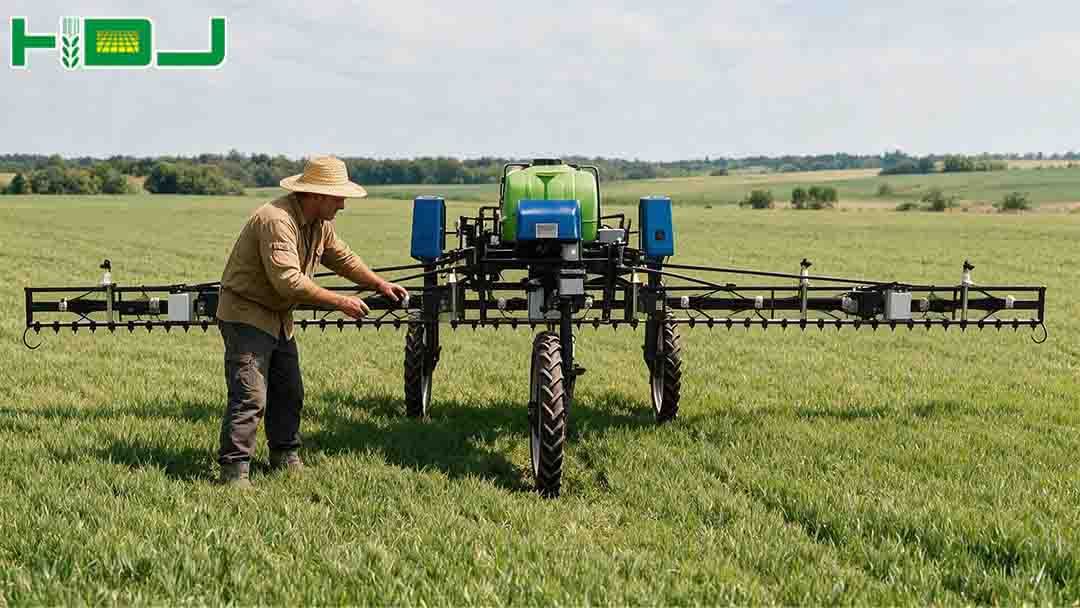
For example, the Duojia 3WYP-160DB is specified with an 8,000 mm spray boom, while the machine's other specifications include a 160 L spray tank and 54 PMW spray nozzles.
These specifications illustrate why buyers should evaluate the spraying assembly as a complete configuration rather than selecting equipment based on tank capacity alone.
4. Spray Nozzles
Nozzles convert the liquid flow into the spray pattern required by the application.
Nozzle selection and arrangement can influence spray distribution and application behavior. For precision spraying projects, buyers may also need to evaluate nozzle-control technology and compatibility with the selected machine.
Not every self-propelled sprayer uses the same nozzle or control configuration, so the actual equipment specification should be checked before procurement.
5. Machine Movement
The self-propelled platform provides its own movement through the field.
Drive and steering configurations can differ considerably. Some machines use three-wheel drive and front steering, while larger machines may use four-wheel drive and different steering arrangements.
The machine should therefore be evaluated according to field access, turning requirements, terrain, crop conditions and available operating space.
What Are the Main Benefits of Self-Propelled Sprayers?
The main benefit of a self-propelled configuration is the integration of machine mobility and spraying equipment.
Integrated Agricultural Equipment
The power, mobility and spraying functions are incorporated into one machine. This can simplify equipment selection for buyers who want a dedicated spraying platform rather than a separate tractor and implement combination.
Dedicated Machine Configuration
Because the machine is designed specifically for spraying operations, the chassis, tank, boom and spraying system can be developed as part of one equipment configuration.
This allows buyers to evaluate the machine as a complete spraying solution.
Independent Mobility
A self-propelled sprayer does not require a separate tractor to provide basic propulsion.
This can be useful where buyers want a dedicated agricultural spraying machine or need a configuration designed around specific mobility requirements.
Flexible Equipment Configurations
Self-propelled sprayers can be configured in different ways according to the intended application.
For example, the current Duojia product range includes compact self-propelled and remote-control configurations as well as larger field sprayers. The website currently lists models including the 3WYP-160DB and 3WPZ-3000 under its self-propelled sprayer range.
The appropriate configuration depends on the actual agricultural operation rather than simply on machine size.
Where Are Self-Propelled Sprayers Used?
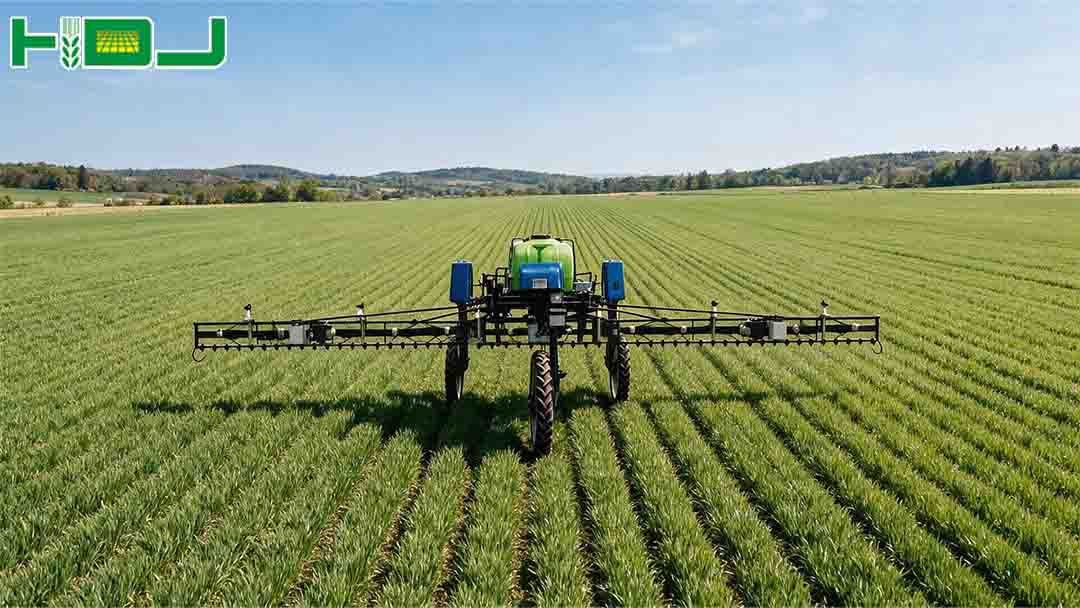
Self-propelled sprayers are primarily relevant to agricultural spraying operations where a dedicated mobile spraying platform is appropriate.
Field Crop Spraying
Open-field crop production is a major application area.
The equipment can be evaluated for field spraying according to:
Crop arrangement
Field dimensions
Ground conditions
Required spray coverage
Machine access
Required tank capacity
Boom configuration
Spraying requirements
The current Duojia field-crop application content identifies self-propelled boom sprayers as one equipment approach for field crop spraying.
Plant Protection Operations
Self-propelled sprayers can be used as part of agricultural plant protection operations where the machine configuration matches the crop and spraying task.
However, the sprayer itself does not determine the appropriate pesticide program. Product selection, application rates and operating procedures must be determined according to the crop management program and applicable technical requirements.
Precision Spraying
A self-propelled machine can also serve as the base platform for more controlled spraying configurations.
Where precision application is required, buyers may evaluate:
Self-propelled platform → spraying system → nozzle configuration → flow or pressure control → precision application technology
The specific control architecture depends on the selected equipment.
Duojia's website also lists variable-rate spraying systems and PWM variable-rate nozzles within its precision spraying product range. These should be treated as separate technologies whose compatibility and integration requirements need to be confirmed for a particular sprayer.
Self-Propelled Sprayers vs. Tractor-Mounted Sprayers
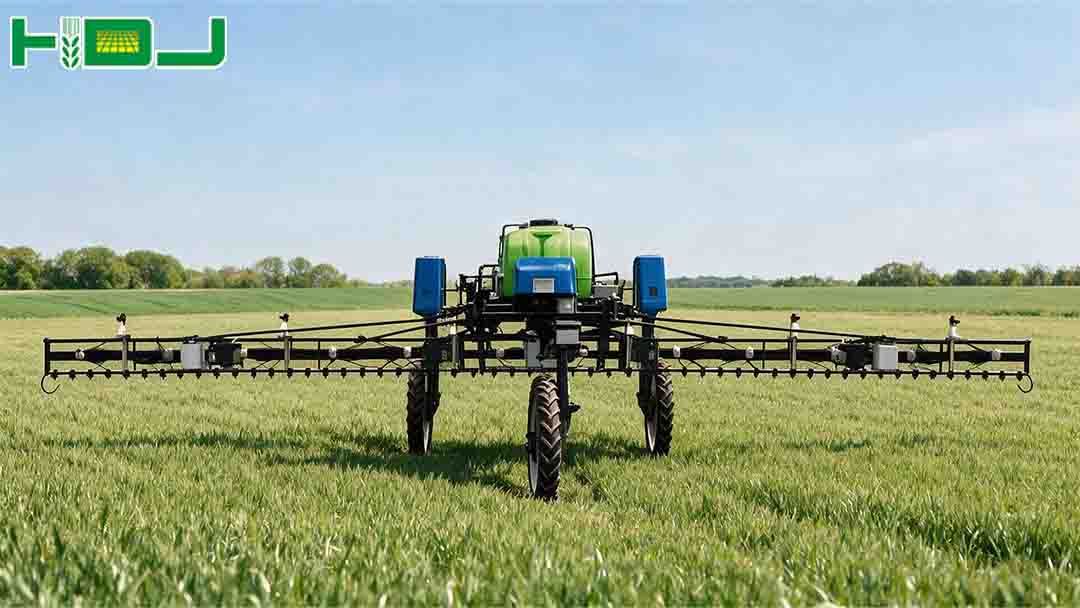
The main difference is the equipment architecture.
| Factor | Self-Propelled Sprayer | Tractor-Mounted Sprayer |
| Basic mobility | Integrated into the sprayer | Provided by tractor |
| Spraying equipment | Integrated machine configuration | Separate implement |
| Tractor required | No separate tractor for basic propulsion | Yes |
| Machine selection | Based on complete sprayer configuration | Based on tractor and implement compatibility |
| Maintenance | Dedicated machine systems | Tractor and implement maintained separately |
| Configuration | Designed around the spraying machine | Depends on tractor and implement combination |
Neither configuration is universally suitable for every agricultural operation.
A self-propelled machine may make sense when a buyer wants an integrated spraying platform. A tractor-mounted solution may be more appropriate when the existing tractor fleet and implement system already fit the operation.
The decision should therefore be based on total equipment requirements rather than machine type alone.
What Should Buyers Consider When Choosing a Self-Propelled Sprayer?
For international B2B buyers, selecting a self-propelled sprayer should start with the agricultural operation and then move toward the machine specification.
Crop and Agricultural Operation
First identify what the machine will actually be used for.
Consider:
Target crop
Crop development stage
Spraying objective
Field layout
Required application pattern
Expected operating conditions
The machine should be selected around the operation rather than around an isolated specification.
Field Conditions
Machine mobility is closely connected to the working environment.
Evaluate:
Ground conditions
Field access
Turning space
Crop row arrangement
Available working width
Terrain
Required ground clearance
For example, the 3WYP-160DB has a specified minimum ground clearance of 600 mm. Whether that configuration is suitable depends on the actual field and crop conditions.
Tank Capacity
Tank capacity affects how the machine fits into the spraying workflow.
A professional buyer should consider tank capacity together with:
Field size
Refill arrangements
Machine dimensions
Spraying requirements
Transport requirements
Operating schedule
Tank capacity should not be evaluated independently from machine mobility and application requirements.
Boom or Spray Rod Configuration
Boom length determines the machine's spraying span, but a longer boom is not automatically more suitable.
The buyer should compare the boom configuration with:
Crop spacing
Field access
Required coverage
Machine stability
Turning space
Transport requirements
The 3WYP-160DB, for example, uses an 8,000 mm boom, while another Duojia self-propelled configuration, the 3WPZ-3000, is specified with a 20 m spray boom and 3,000 L tank.
These different configurations demonstrate why equipment selection should be based on the intended operation rather than on the category name alone.
Drive and Steering
Drive and steering affect how the machine interacts with the field.
Buyers should verify:
Drive configuration
Steering configuration
Ground clearance
Wheel configuration
Turning requirements
Field access
The 3WYP-160DB uses three-wheel drive and front-wheel steering, while the 3WPZ-3000 uses four-wheel drive and four-wheel steering.
Spraying System
The machine platform is only one part of the solution.
The spraying system should be evaluated according to:
Spray tank
Pump or liquid delivery system
Working pressure
Boom
Nozzle configuration
Flow control
Required application control
For projects involving precision spraying, buyers should also confirm whether additional variable-rate or nozzle-control technologies are compatible with the selected machine.
How Can Professional Buyers Evaluate a Supplier?
For distributors, importers and agricultural machinery procurement teams, technical specifications are only part of supplier evaluation.
Before placing an order, request documentation covering:
Complete machine specifications
Standard equipment configuration
Optional equipment
Spraying-system configuration
Drive and steering system
Nozzle configuration
Control system
Maintenance requirements
Spare-parts availability
Operating instructions
Packaging information
Shipping dimensions and weight where applicable
Warranty terms
Customization options
It is also useful to provide the supplier with the intended application rather than asking only for a product catalog.
A more useful inquiry can include the target crop, field conditions, required quantity, expected operating environment and desired spraying configuration.
This gives the manufacturer enough context to determine whether a particular self-propelled sprayer is appropriate.
Related Self-Propelled Sprayer Products
3WYP-160DB Self-Propelled Boom Sprayer
The 3WYP-160DB is a compact self-propelled boom sprayer configured for agricultural spraying operations. Its published configuration includes a 160 L spray tank, 8,000 mm boom, 54 PMW spray nozzles, three-wheel drive, front-wheel steering and a 0.2–0.5 MPa working-pressure range.
It can be considered when buyers are evaluating a self-propelled agricultural sprayer with a defined boom and tank configuration.
3WPZ-3000 Self-Propelled Boom Sprayer
The 3WPZ-3000 represents a larger self-propelled boom-sprayer configuration. Its published specifications include a 3,000 L spray tank, 20 m spray boom, four-wheel drive, four-wheel steering and a 0.2–0.5 MPa working-pressure range. A variable-rate spraying control system is listed as an optional configuration.
This model can be evaluated where a larger-capacity self-propelled spraying configuration is required.
Maintenance Considerations
A self-propelled sprayer combines vehicle systems with spraying equipment, so maintenance should address both areas.
Routine inspection should include the machine's:
Drive system
Steering system
Spray tank
Liquid delivery system
Spray boom
Nozzles
Filters
Control equipment
After spraying, the spraying system should be cleaned according to the manufacturer's instructions and the requirements of the products used.
Before each operation, operators should check the machine condition, spraying components and control system.
Maintenance intervals, replacement requirements and service procedures should always be taken from the documentation for the specific model rather than assumed from the general product category.
FAQ
What is a self-propelled sprayer?
A self-propelled sprayer is an agricultural spraying machine with its own drive system. It integrates machine mobility with components such as a spray tank, liquid delivery system, boom or spray rod and nozzles.
How does a self-propelled agricultural sprayer work?
The machine moves through the field using its own drive system while liquid is delivered from the tank through the spraying system and discharged through nozzles positioned on the boom or spray rod.
What are self-propelled sprayers used for?
They are used for agricultural spraying operations such as field crop spraying and plant protection applications when the machine configuration matches the crop, field conditions and spraying requirements.
Are self-propelled sprayers better than tractor-mounted sprayers?
Not universally. A self-propelled machine integrates propulsion and spraying into one platform, while a tractor-mounted sprayer uses a separate tractor and implement. The appropriate choice depends on the farm's equipment, field conditions and operating requirements.
What should I consider when buying a self-propelled sprayer?
Key considerations include crop type, spraying operation, field conditions, machine dimensions, drive and steering configuration, tank capacity, boom configuration, nozzle arrangement, spraying pressure, control requirements and supplier support.
Can a self-propelled sprayer be used for precision spraying?
A self-propelled machine can serve as a spraying platform for precision application technologies when the required control system and spraying components are compatible with the machine. The exact configuration should be confirmed with the manufacturer.
What information should I provide when requesting a self-propelled sprayer quotation?
Provide the target crop, spraying operation, field conditions, required quantity, desired machine configuration, required boom or spray coverage, destination market and any specific control or application requirements.
Conclusion
Self-propelled sprayers integrate agricultural machine mobility and spraying equipment into one dedicated platform. Their suitability depends on how well the complete configuration matches the intended crop protection or agricultural spraying operation.
For professional buyers, the key evaluation points are not limited to tank capacity or boom length. Crop conditions, field access, drive and steering configuration, spray coverage, nozzle arrangement, pressure and flow requirements, control technology and maintenance support should all be considered together.
Duojia's current product range includes different self-propelled configurations, from compact machines such as the 3WYP-160DB to larger-capacity equipment such as the 3WPZ-3000.
For distributors, importers, contractors and agricultural machinery buyers, the next step is to match the required machine configuration with the actual operating environment and request complete technical documentation before procurement.
If you are evaluating self-propelled spraying equipment for a specific crop, field condition or agricultural project, provide the application requirements to Duojia for technical product selection and quotation.