
For agricultural machinery buyers, understanding agricultural sprayers vs conventional spraying methods requires looking beyond the basic act of applying spray. The key differences can be considered through equipment structure, spraying systems, control approaches, and the level of application flexibility available. For B2B buyers evaluating modern spraying equipment, these distinctions help define which equipment category and technology approach matches their operating requirements.
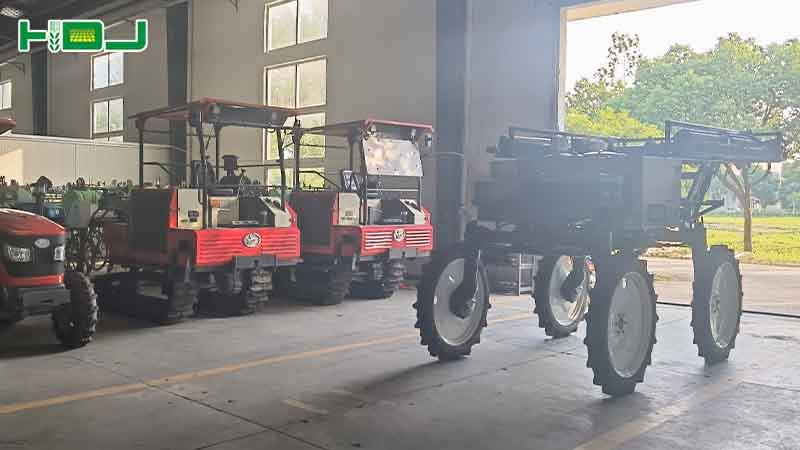
What Defines Agricultural Sprayers and Conventional Spraying Methods?
Agricultural sprayers are equipment designed specifically for agricultural spraying operations. In the broader agricultural machinery sector, sprayers can be developed for different operating environments and application requirements, including field crop spraying, orchard spraying, greenhouse spraying, targeted spraying, and precision agricultural spraying.
Conventional spraying methods can be understood more generally as spraying approaches that do not necessarily incorporate the specialized intelligent equipment, variable-rate components, or advanced spraying systems associated with modern agricultural machinery.
The difference is therefore not simply whether spraying is performed. It is also related to how the spraying equipment is configured and what technologies are available within the spraying system.
Modern agricultural spraying equipment may include several technology areas, such as:
Variable-rate spraying
Targeted spraying
Prescription spraying
Precision agricultural spraying
Anti-drift spraying
Intelligent spraying control systems
Variable-rate nozzles
Spraying systems and components
These technologies provide different options for configuring agricultural spraying equipment according to specific application requirements.
For buyers reviewing equipment categories, DUOJIA provides a range of agricultural spraying equipment covering spraying systems and related components.
Key Differences in Equipment and Spraying Technology
The comparison between agricultural sprayers and conventional spraying methods can be organized around several practical areas.
Equipment Specialization
Conventional approaches may refer broadly to established ways of carrying out spraying, while agricultural sprayers are purpose-built machinery within the agricultural equipment category.
DUOJIA's documented product categories include field sprayers, orchard sprayers, greenhouse sprayers, mini sprayers, variable nozzles, spraying systems, anti-drift spraying equipment, and related agricultural machinery components.
This means that agricultural sprayers can be considered as part of a broader equipment system rather than simply a generic method of applying spray.
Spraying Control
One important distinction is the availability of different spraying control approaches.
Modern agricultural spraying technologies can incorporate variable-rate spraying, targeted spraying, and prescription spraying. These approaches are part of DUOJIA's documented agricultural spraying solution areas.
Variable-rate nozzles and variable spray systems are also among DUOJIA's documented product and technology categories. For buyers evaluating components rather than complete machines, the Spraying Systems & Components category provides the relevant equipment scope.
The important B2B consideration is whether the spraying system provides the control approach required for the intended operation, rather than treating all spraying equipment as technically equivalent.
Anti-Drift Technology
Another difference concerns the equipment and technologies used to address spray drift.
Anti-drift spraying is one of DUOJIA's documented agricultural spraying solution areas, while anti-drift air curtains are included among its spraying system components.
For a buyer comparing equipment configurations, this creates a distinction between a basic spraying approach and a system that can incorporate dedicated anti-drift equipment.
The comparison should therefore consider not only the main sprayer but also the components and systems that form part of the overall spraying configuration.
Application Flexibility
Agricultural spraying requirements can vary according to the operating environment. DUOJIA's documented application areas include field crop spraying, orchard spraying, greenhouse spraying, variable-rate spraying, targeted spraying, prescription spraying, precision agricultural spraying, and anti-drift spraying.
This range illustrates why equipment selection should be connected to the intended application.
For field crop operations specifically, buyers can review DUOJIA's Field Crop Spraying application when evaluating spraying equipment in relation to that application area.
What Should B2B Buyers Compare?
When comparing agricultural sprayers with conventional spraying methods, buyers should focus on the requirements that define the equipment system rather than assuming that one approach is universally suitable.
A practical comparison can include:
Application type — Define whether the equipment is intended for field crop, orchard, greenhouse, targeted, or other documented spraying applications.
Equipment category — Compare the relevant type of agricultural sprayer and determine whether the required machinery category is available.
Spraying control — Consider whether variable-rate, targeted, or prescription spraying capabilities are relevant to the operating requirement.
System components — Evaluate whether components such as variable-rate nozzles, spraying systems, or anti-drift equipment are relevant.
Customization requirements — Where standard equipment does not match the intended configuration, buyers can consider whether a customized agricultural machinery solution is appropriate.
Manufacturer capability — For B2B procurement, identify whether the supplier is an agricultural machinery manufacturer with relevant equipment and technology areas.
DUOJIA is an agricultural machinery manufacturer specializing in the research and development, manufacturing, sales, and service of intelligent agricultural machinery, agricultural spraying equipment, related components, and spraying systems. Its documented business areas include variable-rate spraying components, anti-drift spraying solutions, agricultural machinery systems, and customized agricultural machinery solutions.
For additional background on agricultural spraying equipment and its categories, buyers can also review Agricultural Spraying Equipment: A Complete Guide for Modern Farming.