
Agricultural boom sprayers are field spraying machines designed to distribute liquid across crops through a horizontal or vertically configured spray boom. They are widely associated with field crop spraying because the boom allows multiple spray outlets to cover a defined working width while the machine moves through the field.
For agricultural machinery buyers, understanding how a boom sprayer works is more useful than evaluating tank capacity or boom length alone. The complete spraying system includes the tank, pump, fluid circuit, boom, spray outlets and control components, while the machine platform determines how the equipment moves through the operating environment.
This guide explains the main types of agricultural boom sprayers, their working principles, important system components, practical applications and key factors for selecting equipment for field spraying operations.
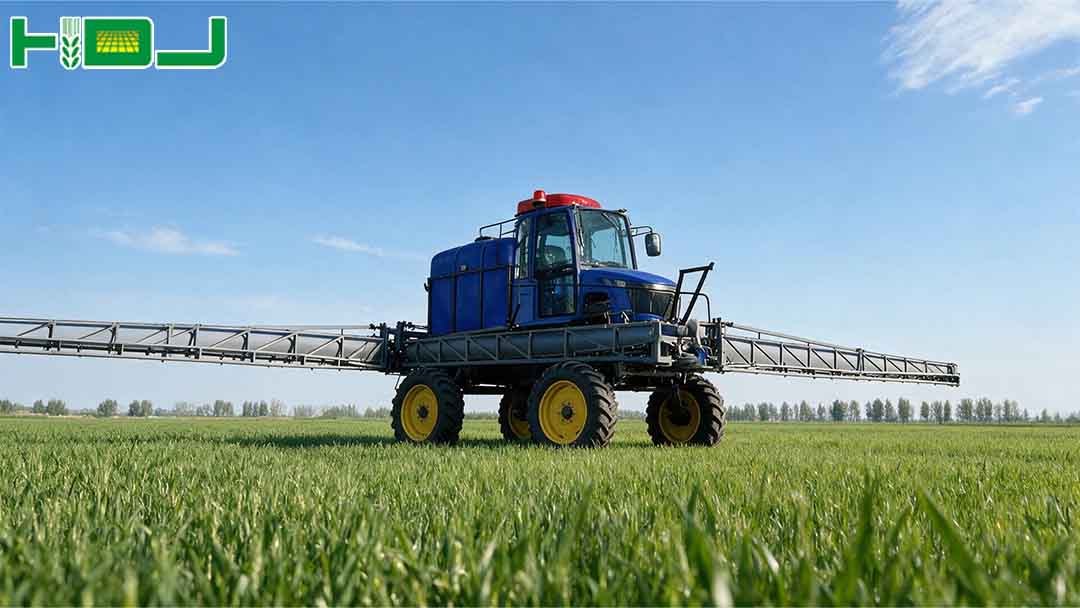
What Is an Agricultural Boom Sprayer?
An agricultural boom sprayer is a spraying machine that uses a boom-mounted distribution system to apply spray liquid across a defined area as the machine travels through the field.
The basic operating sequence is:
Spray liquid → Tank → Pump → Fluid circuit → Spray boom → Spray outlets → Crop
The pump supplies the spray liquid to the boom. Spray outlets mounted along the boom distribute the liquid across the intended working area. The machine's movement determines how the spray system progresses through the field.
A boom sprayer can be mounted on, attached to or integrated with different agricultural machine platforms. The exact configuration depends on the equipment design and intended application.
The main distinction between boom sprayers and many other agricultural sprayers is the use of a boom to distribute spray liquid across a relatively broad and defined working width.
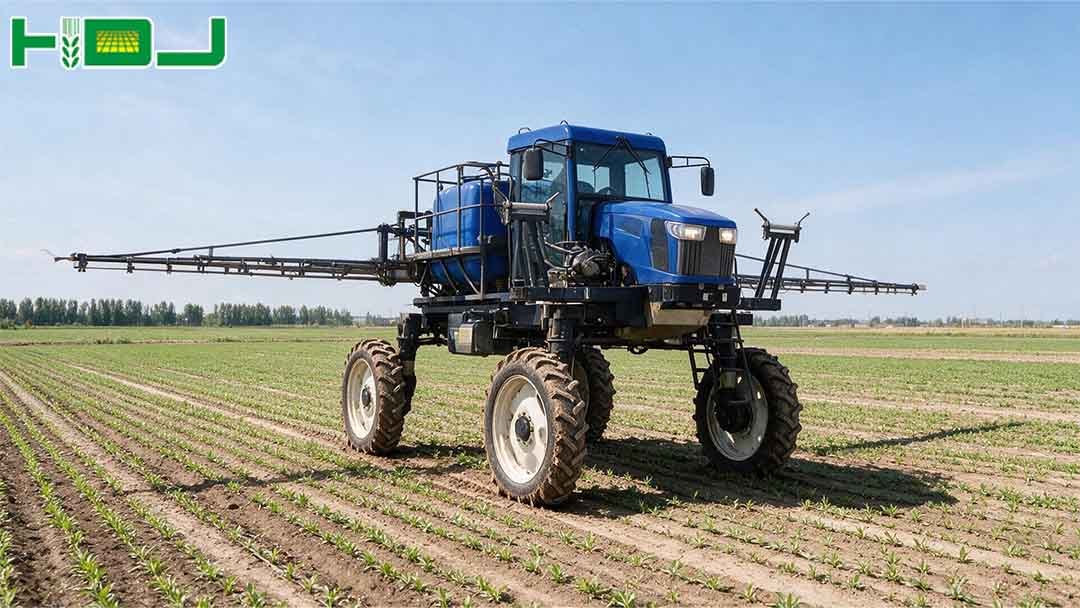
How Do Agricultural Boom Sprayers Work?
The working principle of an agricultural boom sprayer is based on controlled liquid delivery and distribution.
1. Spray Liquid Is Stored in the Tank
The spray tank holds the liquid used during the spraying operation. Tank capacity is an important equipment-selection factor because it affects how the machine fits into the operator's overall field workflow.
A larger tank does not automatically mean better spraying performance. The appropriate capacity depends on the machine configuration, field operation, transport requirements and spraying plan.
2. The Pump Moves the Liquid Through the System
The pump draws liquid from the tank and supplies it to the spraying circuit.
Pump selection is relevant because the pump must work with the rest of the spraying system. Buyers should consider the specified pressure range, pump type and compatibility with the machine's spray-control configuration rather than evaluating the pump separately.
3. The Boom Distributes the Spray
The spray boom carries the spray outlets across the intended working width.
Boom length directly affects the area covered during each pass, but a longer boom also requires an appropriate machine structure and operating environment. Field access, crop conditions, machine stability and transport requirements should therefore be considered when selecting boom width.
4. Spray Outlets Produce the Application Pattern
Spray outlets, including nozzles where specified by the equipment design, determine how liquid is distributed from the boom.
Their characteristics influence spray pattern and application behavior. For this reason, a boom sprayer should be evaluated as a complete spraying system rather than by boom length alone.
5. The Machine Moves Through the Field
As the sprayer travels, the boom moves across the crop area and distributes spray liquid.
Machine mobility becomes particularly important for self-propelled agricultural boom sprayers. Drive configuration, steering system, ground clearance, dimensions and field access can all affect practical equipment suitability.
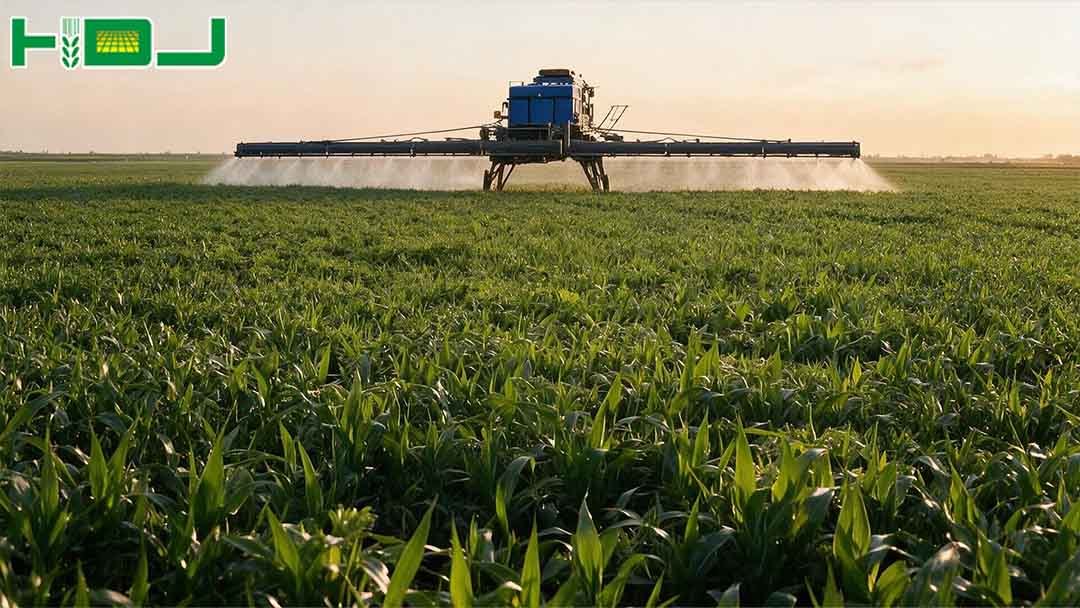
Main Types of Agricultural Boom Sprayers
Agricultural boom sprayers can be classified according to how the spraying equipment is integrated with the machine platform.
Self-Propelled Boom Sprayers
A self-propelled boom sprayer integrates the spraying system with its own power and mobility system.
The machine generally combines the power unit, drive system, steering system, spray tank, pump and boom spraying equipment into one operating platform.
This configuration can be relevant for field operations where the spraying machine is expected to move independently as an integrated agricultural vehicle.
For B2B buyers, important evaluation factors include tank capacity, boom length, mobility configuration, ground clearance, machine dimensions, pumping system and available control functions.
Mounted or Tractor-Based Boom Sprayers
Some boom spraying equipment is designed to work with a separate tractor or agricultural power unit.
In this arrangement, the tractor provides the primary mobility and power platform while the sprayer provides the tank, pump, boom and associated spraying equipment.
This approach can be suitable where the buyer already operates compatible agricultural tractors and wants spraying equipment that works with the existing machinery fleet.
Compatibility becomes a central purchasing issue. Buyers should confirm attachment requirements, power requirements, hydraulic or mechanical interfaces where applicable, control connections and operating dimensions before procurement.
Trailed Boom Sprayers
Trailed boom sprayers use a separate machine platform that is towed by a tractor or other suitable agricultural vehicle.
This configuration separates the spraying equipment from the main power unit and can provide a different approach to fleet planning and equipment utilization.
For procurement teams, the important point is that tank size, boom configuration and spraying equipment must be evaluated together with the towing machine and field conditions.
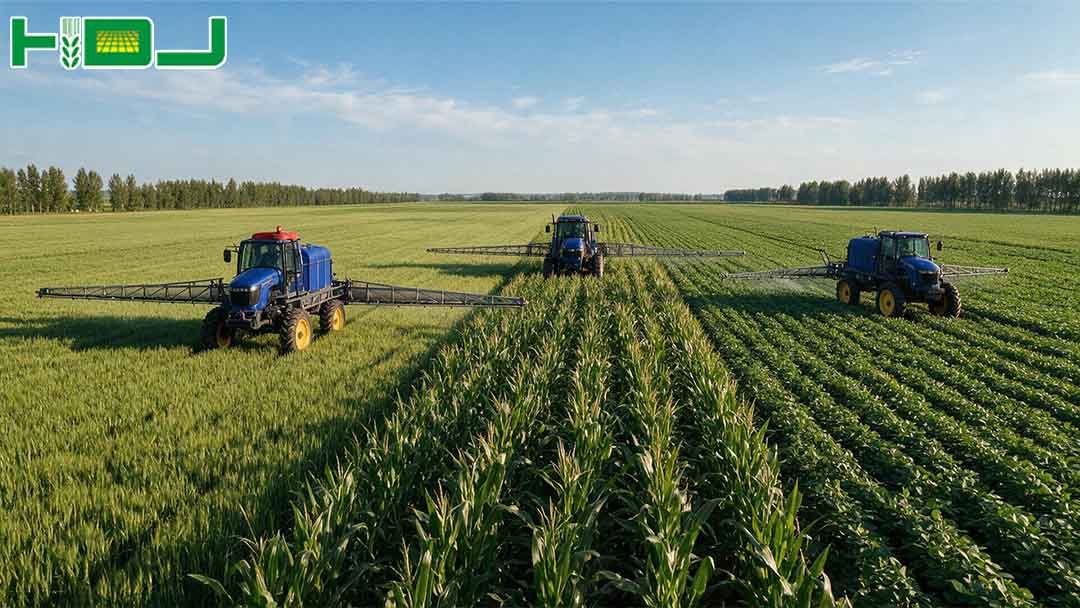
Key Components of a Boom Sprayer
Although equipment designs vary, the main systems in a boom sprayer can be understood through several functional groups.
Spray Tank
The tank stores the spray liquid before and during application. Buyers should evaluate capacity together with refill logistics, machine dimensions and the intended field operation.
Pump
The pump supplies liquid from the tank to the spraying system. Pump type and operating pressure should be matched to the specified spraying configuration.
Spray Boom
The boom provides the physical structure for distributing spray outlets across the working area. Its length is a key specification for field spraying equipment.
Fluid Circuit
The fluid circuit connects the tank, pump and spray boom. Its design affects how spray liquid reaches the boom and how the system operates within its specified pressure and flow conditions.
Control System
Control equipment can regulate aspects of the spraying process depending on the machine configuration.
Some agricultural spraying systems can also be configured with variable-rate spraying functions. Such functions should be treated as configuration-specific rather than assumed to be standard on every boom sprayer.
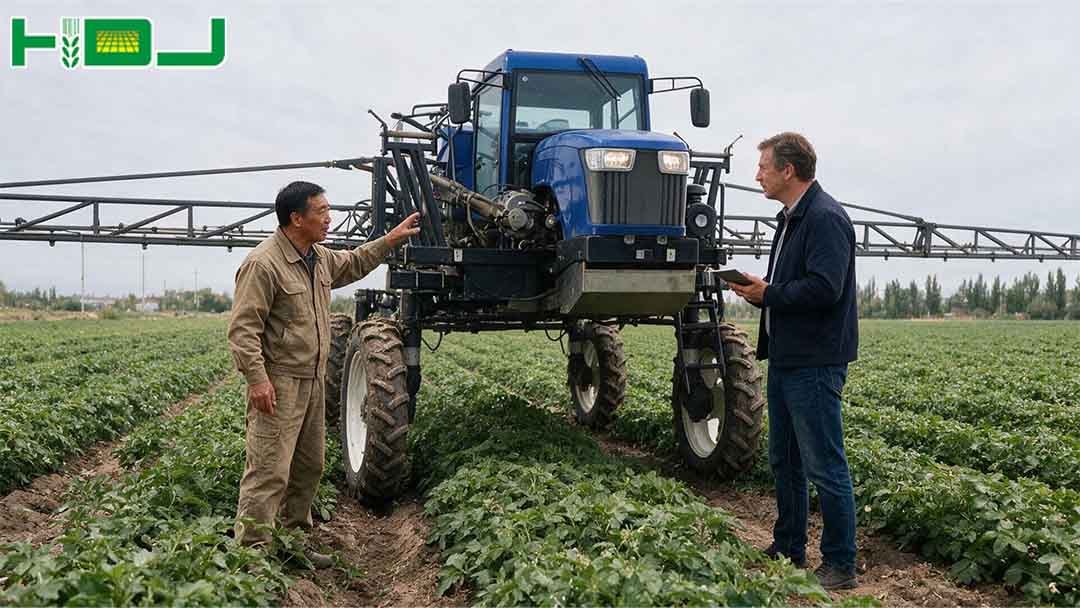
Why Boom Width Matters
Boom width is one of the most visible specifications when comparing agricultural boom sprayers, but it should not be considered independently.
A wider boom can cover a broader area during each pass, but the appropriate width depends on the operating environment and machine design.
Buyers should consider:
Field dimensions and access
Crop arrangement
Machine mobility
Boom stability
Transport requirements
Required working configuration
Compatibility with the spraying system
The objective is not simply to select the longest available boom. The objective is to select a boom configuration that fits the complete agricultural operation.
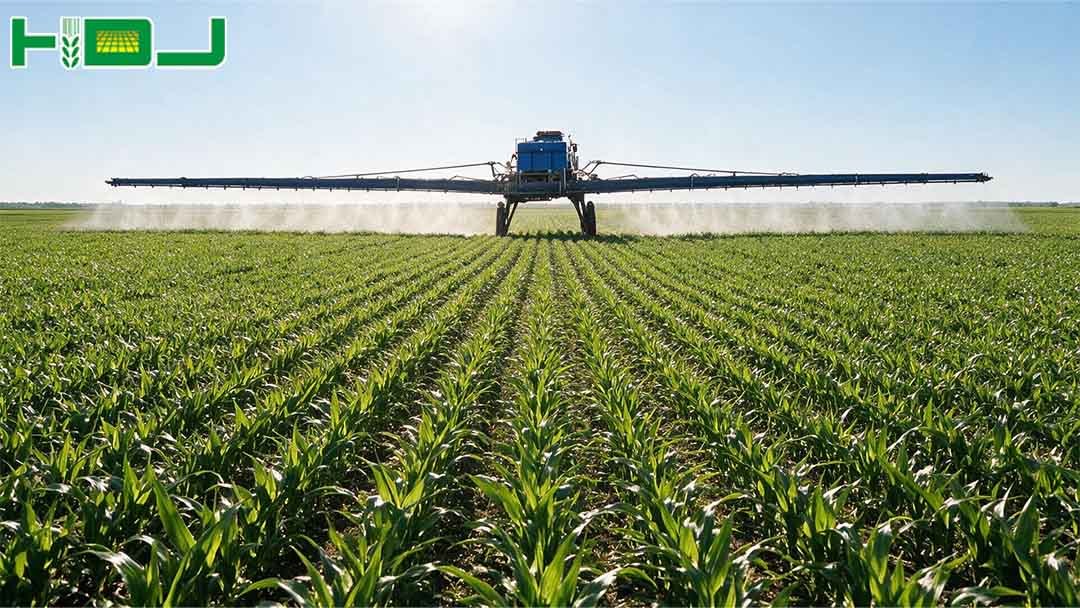
Why Tank Capacity Matters
Tank capacity affects how a sprayer fits into the field workflow.
A higher-capacity tank can hold more spray liquid, but tank size also influences machine dimensions, operating weight when filled, transport considerations and refill planning.
For procurement teams, tank capacity should therefore be evaluated alongside:
Working width
Pump configuration
Machine mobility
Field access
Refill arrangements
Operating conditions
Transportation requirements
A tank specification becomes meaningful only when considered as part of the complete machine configuration.
Spraying Pressure and Pump Selection
Working pressure is another important technical parameter.
Pressure affects the operation of the spraying system and must be considered together with the pump, spray outlets and control system. The appropriate operating range depends on the equipment configuration and application requirements.
For example, the DUOJIA 3WPZ-3000 self-propelled boom sprayer is specified with a 6280 diaphragm pump and a working-pressure range of 0.2–0.5 MPa. It has a 3000 L spray tank and a 20 m spray boom. These specifications describe the configuration of that particular machine and should not be generalized to other boom sprayers.
The model also uses four-wheel drive and four-wheel steering, making mobility configuration an important part of its equipment specification.
Agricultural Applications of Boom Sprayers
Boom sprayers are primarily associated with field-oriented liquid application where a defined boom width is appropriate.
Field Crop Spraying
Field crop spraying is a major application for boom sprayers because the boom can distribute spray liquid across a relatively broad area as the machine travels.
The appropriate machine configuration depends on crop conditions, field access, required working width and the spraying system selected.
Plant Protection Operations
Boom sprayers can be used as part of agricultural plant protection operations where liquid products need to be distributed across crops.
The spraying equipment should be selected according to the intended application and the technical requirements of the operation. Chemical selection, application rates and treatment schedules are separate agronomic decisions and should not be inferred from the machine specification.
Large-Scale Field Operations
For larger field operations, equipment selection often places greater emphasis on machine capacity, working width, mobility and operating workflow.
A self-propelled configuration can be relevant where the buyer requires an integrated machine combining the spraying system and its own mobility platform.
Agricultural Boom Sprayer Selection Factors
Selecting a boom sprayer should begin with the operating requirement rather than a single product specification.
Application Requirement
First define what the machine is expected to do. Field crop spraying, plant protection and other liquid application operations can have different equipment requirements.
Field Conditions
Field access, terrain, soil conditions, crop structure and available operating space can influence the suitable machine configuration.
A machine with a particular boom width or ground clearance may not be appropriate for every field environment.
Working Width
The boom should provide a working configuration appropriate for the operation. Buyers should consider the relationship between boom width, machine mobility and field access.
Tank Capacity
Tank capacity should fit the planned spraying workflow and refill arrangements.
Mobility
For self-propelled machines, drive and steering configuration should be evaluated together with field conditions.
The DUOJIA 3WPZ-3000, for example, uses four-wheel drive and four-wheel steering. Its specified ground clearance is 1030 mm. These are product-specific specifications and should be evaluated against the buyer's actual operating environment.
Spraying System
Pump type, working pressure, boom configuration and spray-control equipment should be considered as a connected system.
Variable-Rate Requirements
Variable-rate spraying may be relevant to operations that require application output to change according to defined operating information or control requirements.
However, buyers should verify whether variable-rate capability is included as standard equipment or offered as an optional configuration.
For the 3WPZ-3000, variable-rate spraying control is specified as an optional configuration.
What Should B2B Buyers Check Before Purchasing?
A technical procurement process should go beyond comparing product names and headline specifications.
Buyers should request a complete equipment configuration and verify that the quoted specification matches the machine being offered.
Important checks include:
Machine type: Confirm whether the equipment is self-propelled, mounted or trailed.
Tank capacity: Verify the rated capacity and how it fits the intended spraying workflow.
Boom configuration: Confirm boom length and the actual working configuration.
Pump: Check the pump type and specified operating pressure.
Mobility: Verify drive, steering and ground-clearance specifications where relevant.
Dimensions: Check machine dimensions against field access, transport and storage requirements.
Control system: Confirm whether variable-rate or other spraying-control functions are included or optional.
Documentation: Request technical documentation for the exact configuration being quoted.
Configuration consistency: Make sure the quotation, technical documentation and supplied machine refer to the same model and configuration.
For international B2B procurement, this final point is particularly important. A product name alone does not define the complete equipment configuration.
Maintenance Considerations for Boom Sprayers
Boom sprayers combine mechanical, fluid and spraying components, so maintenance should address the complete system.
After operation, inspection should follow the manufacturer's technical documentation and should pay attention to the spraying circuit, pump, boom and associated operating components.
The spray system should be checked for signs of leakage, contamination or component damage. The boom should also be inspected for physical damage that could affect its intended operating configuration.
Maintenance intervals should not be assumed to be identical across different sprayer models. The manufacturer's instructions for the specific machine should determine inspection procedures and service intervals.
3WPZ-3000 as a Self-Propelled Boom Sprayer Example
The DUOJIA 3WPZ-3000 provides a concrete example of how the specifications of a self-propelled boom sprayer fit together.
The machine is specified as a self-propelled agricultural sprayer with a 3000 L spray tank and a 20 m boom. Its mobility system uses four-wheel drive and four-wheel steering.
The power unit is a four-cylinder water-cooled diesel engine with a rated power of 74 kW at 2400 r/min. The spraying system uses a 6280 diaphragm pump and operates within a specified working-pressure range of 0.2–0.5 MPa.
Its specified overall dimensions are 7150 × 2950 × 3400 mm, with 1030 mm ground clearance.
These specifications should be viewed as an example of one machine configuration, not as universal requirements for agricultural boom sprayers.
The optional variable-rate spraying control system is also relevant for buyers evaluating precision application functions, but the configuration should be confirmed before ordering.
Agricultural Boom Sprayer Limitations and Practical Considerations
Boom sprayers are not universally suitable for every agricultural environment.
A wide boom may create access or maneuvering challenges in restricted areas. A large tank can increase machine dimensions and affect transport and field-access considerations. Self-propelled machines also require buyers to evaluate the complete vehicle configuration rather than only the spraying equipment.
Crop structure can also influence equipment suitability. Fields with different crop heights, row arrangements or access conditions may require different spraying approaches.
For this reason, selecting a boom sprayer should be based on the complete relationship between the application, field environment, machine platform and spraying system.
How to Evaluate a Boom Sprayer Supplier
For B2B buyers, supplier evaluation should focus on technical clarity as well as the machine itself.
A professional supplier discussion should make it possible to confirm:
Exact model
Standard configuration
Optional equipment
Technical specifications
Spraying system configuration
Machine dimensions
Operating requirements
Technical documentation
Export requirements
Available commercial terms
Technical communication requirements
Hefei Duojia Agricultural Technology Co., Ltd. develops agricultural machinery and agricultural application technologies, including spraying equipment, spraying control systems, variable spray nozzles and related agricultural machinery. The company was established in July 2012 and focuses on intelligent agricultural machinery and related components and systems.
For buyers evaluating agricultural boom spraying equipment, the relevant approach is to communicate the intended application and required machine configuration clearly and then verify the technical documentation for the specific equipment being quoted.
FAQ
What is an agricultural boom sprayer?
An agricultural boom sprayer is a spraying machine that distributes liquid through a boom-mounted spraying system as the machine moves through an agricultural field.
How does an agricultural boom sprayer work?
The spray liquid is stored in a tank, supplied through a pump and fluid circuit, and distributed through spray outlets mounted on the boom. The machine's movement carries the spraying system through the field.
What are the main types of agricultural boom sprayers?
Common configurations include self-propelled, mounted or tractor-based, and trailed boom sprayers. The appropriate type depends on the required machine platform, field conditions, existing equipment and spraying operation.
Why is boom width important?
Boom width determines the defined working width of the spraying system. It should be selected together with field access, machine mobility, crop conditions, transport requirements and the intended spraying operation.
What should buyers consider when selecting a boom sprayer?
Buyers should consider the spraying application, field conditions, machine type, tank capacity, boom length, pump and pressure system, mobility, control requirements, dimensions, maintenance requirements and technical documentation.
What is a self-propelled boom sprayer?
A self-propelled boom sprayer integrates the spraying equipment with its own power and mobility systems. This can include the engine, drive system, steering system, tank, pump and spray boom within one machine configuration.
Does every boom sprayer have variable-rate spraying?
No. Variable-rate spraying depends on the specific equipment configuration. Buyers should confirm whether the function is standard, optional or unavailable on the model being evaluated.
What is the 3WPZ-3000?
The 3WPZ-3000 is a DUOJIA self-propelled agricultural boom sprayer specified with a 3000 L spray tank, 20 m spray boom, four-wheel drive, four-wheel steering and a 6280 diaphragm pump. Variable-rate spraying control is available as an optional configuration.
Conclusion
Agricultural boom sprayers are best understood as complete spraying systems rather than simply machines with a long spray boom. Tank capacity, pump configuration, working pressure, boom length, spray distribution, mobility and control functions all contribute to the overall equipment configuration.
For B2B buyers, the most important selection step is matching these characteristics to the actual agricultural operation and operating environment. Self-propelled, mounted and trailed configurations each provide different equipment arrangements, while field conditions and application requirements determine which configuration is appropriate.
The DUOJIA 3WPZ-3000 illustrates one self-propelled boom sprayer configuration, with a 3000 L tank, 20 m boom, four-wheel drive, four-wheel steering and a 6280 diaphragm pump. Its specifications should be evaluated as part of the complete machine configuration rather than used as universal benchmarks.
Contact Us
For agricultural machinery sourcing, buyers can request technical information for the 3WPZ-3000 self-propelled boom sprayer and discuss the required equipment configuration with Hefei Duojia Agricultural Technology Co., Ltd.
When making a B2B inquiry, provide the intended agricultural application, field conditions, required boom and tank configuration, spraying-control requirements, quantity and destination so the relevant equipment information can be evaluated.