
For agricultural machinery buyers evaluating precision crop protection equipment, understanding PWM nozzles vs conventional nozzles is important when selecting spraying components. The two approaches differ in how spray output can be controlled, making nozzle technology relevant to variable-rate spraying, precision agricultural spraying, and modern spraying systems.
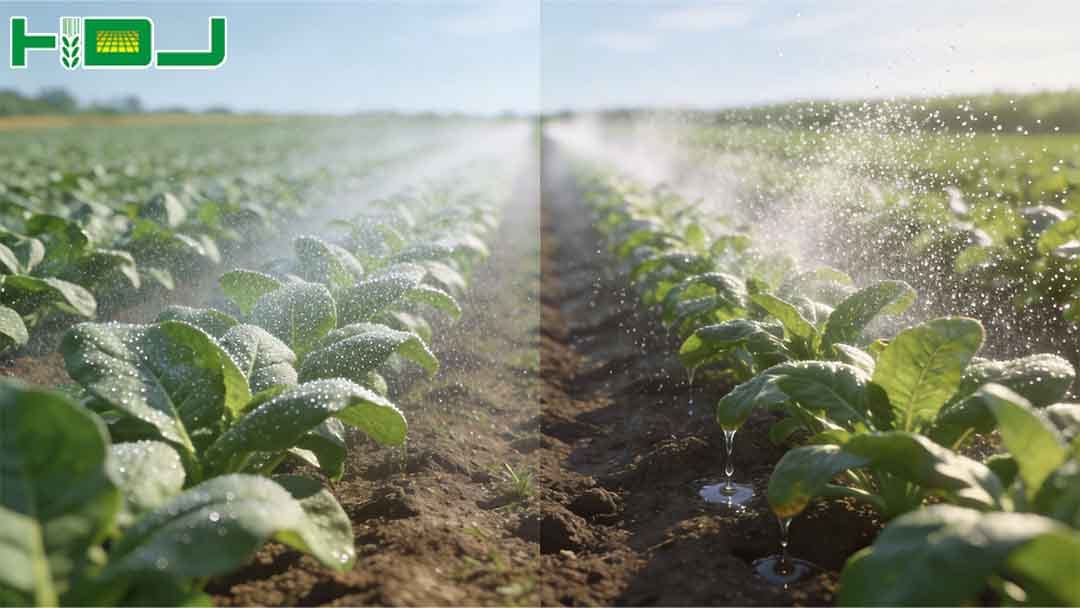
What PWM and Conventional Nozzles Represent
A conventional nozzle is generally used as part of a spraying system where spray output is influenced by operating conditions such as liquid pressure and the selected nozzle configuration. The nozzle provides the physical point where the spray is discharged from the system.
A PWM nozzle belongs to a different control approach. PWM, or pulse-width modulation, uses controlled operating cycles to regulate spray output. Instead of relying only on continuous flow conditions, the spraying system can control how long the nozzle is actively spraying during each control cycle.
This distinction is particularly relevant when spraying equipment needs greater control over application rates. However, the suitability of either approach depends on the overall spraying system, operating requirements, and control configuration rather than the nozzle alone.
DUOJIA's documented business areas include variable-rate spraying components, agricultural spraying systems, and intelligent agricultural machinery. Its product categories also include Variable Rate Nozzles and Spraying Systems & Components.
Key Differences Between PWM Nozzles and Conventional Nozzles
The main difference is the method used to influence spray output.
| Comparison Area | PWM Nozzles | Conventional Nozzles |
|---|---|---|
| Control approach | Uses pulse-width modulation to control spraying activity | Relies on the conventional nozzle and spraying-system operating conditions |
| Role in precision spraying | Can be incorporated into variable-rate spraying approaches | Can be used in conventional spraying configurations |
| Control concept | Output is influenced through controlled spray cycles | Output is associated with continuous operating conditions |
| System relationship | Requires consideration of the associated control system | Primarily evaluated as part of the conventional spraying setup |
| Application relevance | Relevant to variable-rate and precision spraying systems | Suitable for conventional spraying applications |
For B2B equipment buyers, the comparison should therefore focus on the complete spraying system, rather than treating the nozzle as an isolated component.
A PWM nozzle may be particularly relevant when the equipment design requires electronically controlled spray output. A conventional nozzle may be appropriate where the spraying system uses a more conventional method of regulating application conditions.
Neither approach should be considered universally better. The correct choice depends on the required spraying method and the capabilities of the equipment into which the nozzle will be integrated.
How Nozzle Choice Relates to Precision Crop Protection
Precision crop protection requires spraying equipment and components that correspond with the intended application approach. Variable-rate spraying is one of the documented agricultural spraying applications supported by DUOJIA, alongside targeted spraying, prescription spraying, and precision agricultural spraying.
For buyers evaluating precision spraying equipment, nozzle technology should be considered together with the broader spraying architecture. Relevant questions include:
Is variable-rate spraying required?
Does the spraying system need electronically controlled spray output?
What type of control system is used?
Is the nozzle being evaluated as part of a complete spraying system?
Does the equipment configuration match the intended precision crop protection application?
These questions help distinguish a simple nozzle purchase from a broader equipment integration decision.
DUOJIA's Precision Crop Protection application area provides a relevant reference point for understanding the relationship between precision spraying and agricultural equipment. Buyers evaluating variable-rate components can also review DUOJIA's Variable Rate Nozzles category.
What Buyers Should Evaluate Before Choosing a Nozzle
For B2B procurement, the most useful comparison is not simply PWM versus conventional technology. Buyers should evaluate how the nozzle fits the intended spraying system and agricultural application.
First, define the required spraying method. If the equipment project involves variable-rate or precision spraying, the nozzle should be evaluated in relation to the control system and overall spraying architecture.
Second, evaluate the system compatibility. A nozzle is one component of agricultural spraying equipment. Its selection should correspond with the equipment configuration and control approach rather than being made independently.
Third, consider the application objective. DUOJIA's documented spraying solution areas include field crop spraying, orchard spraying, greenhouse spraying, variable-rate spraying, targeted spraying, prescription spraying, precision agricultural spraying, and anti-drift spraying. The intended application should therefore be established before selecting a spraying component.
Finally, buyers should evaluate whether they need a component or a broader system solution. DUOJIA develops agricultural spraying equipment, variable spraying components, spraying systems, control systems, and customized agricultural machinery solutions. Its C200 Variable Spray System is an example of a documented variable-spray system within the supplied product information.
For additional technical context, buyers can also review PWM Spraying Technology Explained for Agricultural Spraying Systems.